Best Balkan Countries to Visit in 2026: Find Your Perfect Destination
Published: 7 Nov 2026
Choosing the best Balkan countries to visit is harder than it sounds. The region packs old towns, Adriatic beaches, mountain parks and lively capitals into one small map. Each country feels different, and prices range from very cheap to close to Western Europe.
This guide helps you pick fast. You will find quick picks by travel style, a country-by-country breakdown, three two-week routes, the best months to go, and the entry rules and costs that matter right now.
A note on prices: All prices in this article are in US dollars (USD). Most Balkan countries use the euro or a local currency, so we converted at about €1 = $1.12 (a mid-market rate from mid-October 2026). Exchange rates move, so treat every figure as a guide, not a quote.
Quick Picks: Best Balkan Countries by Travel Style
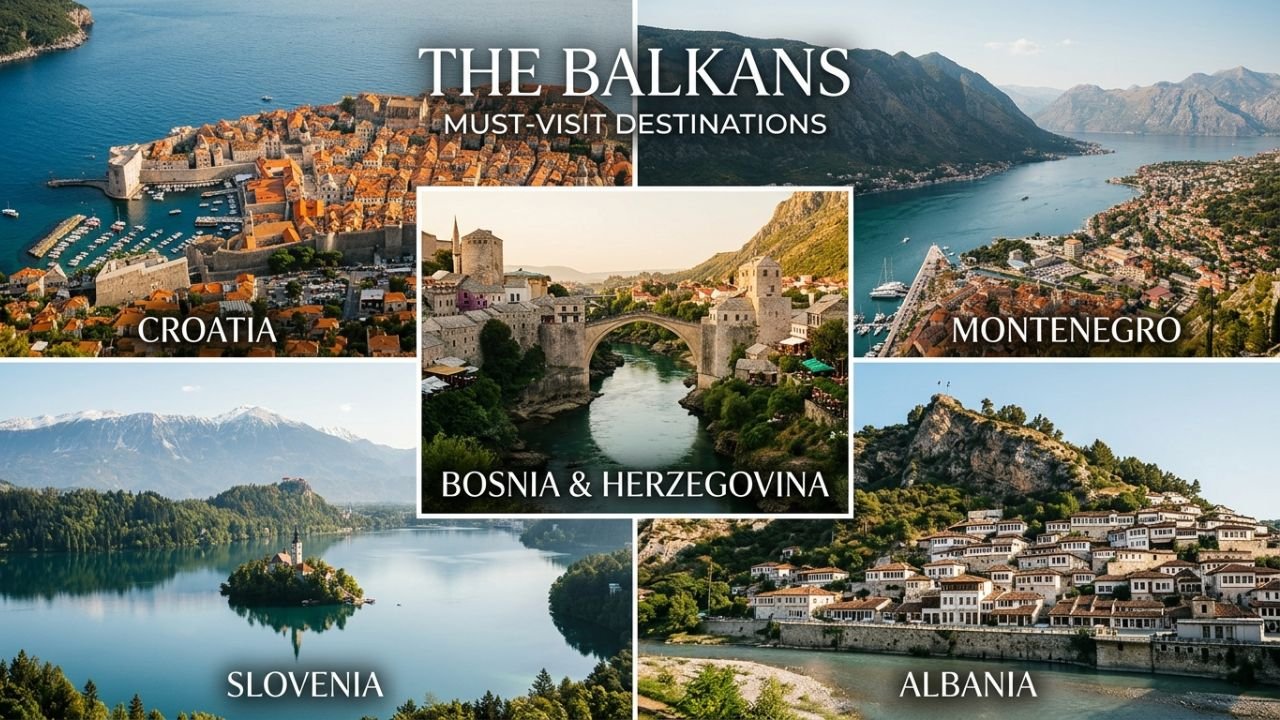
Short on time? Start here. Each pick is explained in the sections below.
| Travel style | Best country | Why it wins |
| First serious trip | Bosnia & Herzegovina | History, old towns, waterfalls and low prices |
| Compact scenery | Montenegro | Coast, bay and mountains close together |
| Beaches and value | Albania | Long coastline and some of the lowest costs |
| Cities, nightlife, food | Serbia | Belgrade’s energy and hearty cooking |
| Lakes and a slow pace | North Macedonia | Lake Ohrid, monasteries and few crowds |
| Value cities and history | Bulgaria | Roman ruins, monasteries and the euro |
| Easy travel (not cheap) | Slovenia and Croatia | Smooth logistics and top sights |
| Something different | Kosovo | Young cities and little tourist traffic |
Country-by-Country Guide to the Balkans
Bosnia & Herzegovina: The Best Overall Balkan Country for a First Serious Trip
Bosnia gives you the most in one trip. Sarajevo mixes an Ottoman bazaar with Austro-Hungarian streets, all within walking distance. The country’s recent history is easy to learn about here, through museums and sites such as the Tunnel of Hope.
Mostar’s Old Bridge is the famous stop, but do not skip the nature. Kravice Waterfalls and the riverside monastery-house at Blagaj make good day trips. Food is cheap and filling: think ćevapi, burek and strong Bosnian coffee.
Good to know:
- Cities are walkable, but buses between smaller places are slow. A rental car or a private transfer saves time.
- Bosnia uses the convertible mark, which is tied to the euro. Carry some cash for small guesthouses and cafes.
- Stay on marked paths when hiking in rural areas. Mines from the 1990s conflict still exist in some regions.
Montenegro: Best for Compact Drama
Montenegro is small, so you can see a lot without long drives. The Bay of Kotor, with its walled town and mountain backdrop, is the highlight. Perast and Budva are easy add-ons on the same coast.
Inland, Durmitor National Park and the Tara River Canyon give you hiking and rafting. You can do beach, old town and mountains in one week.
Montenegro costs more than Albania or Bosnia, especially in July and August. It uses the euro, which makes budgeting simple. Kotor gets crowded when cruise ships arrive, so go early in the day.
Albania: Best Balkan Country for Beaches and Value
Albania is the pick for sea and savings. The Albanian Riviera, with towns such as Ksamil, Himarë and Dhërmi, offers clear water at lower prices than the Croatian coast. One 2026 backpacker budget tool puts a typical day at about $35.
There is more than beaches. Berat and Gjirokastër are stone towns with UNESCO status. Tirana is colorful and lively, and the Accursed Mountains near Theth and Valbona are a hiker’s reward.
Mountain roads are slow, so plan extra drive time. Beach towns get busy and pricier in peak summer. June and September are the sweet spots.
Serbia: Best for Cities, Nightlife and Food
Serbia is about people and energy rather than scenery. Belgrade has a big riverside fortress at Kalemegdan, a famous bar and club scene, and floating river clubs in summer. Novi Sad is calmer and has its own hilltop fortress at Petrovaradin.
Food is a big reason to come. Expect grilled meats, creamy kajmak, fresh bread and local rakija.
Serbia has no coastline, so it works best as part of a longer route. It uses the Serbian dinar. See the Kosovo section for a border tip that affects Serbia plans.
North Macedonia: Best for Lakes, Monasteries and a Slower Trip
North Macedonia suits travelers who like quiet places. Lake Ohrid is the star, with a UNESCO-listed old town, lakeside churches and the Monastery of St. Naum. Skopje’s Old Bazaar and nearby Matka Canyon round out a short stay.
It is also one of the cheapest options in the region. The same backpacker budget tool lists a typical day at about $34.
Public transport between towns is limited, so a car helps. The country uses the denar.
Bulgaria: Best for Value Cities and Underrated History
Bulgaria is easy to overlook, which is part of its charm. Sofia has a walkable center and good food. Plovdiv is one of Europe’s oldest living cities, with a Roman theater in the middle of town. Rila Monastery and Veliko Tarnovo add more history, and the Black Sea coast offers a beach option.
Two changes make 2026 a good year to visit. Bulgaria joined the euro on January 1, 2026, so you no longer need to exchange money. It is also a full Schengen member, so border checks with neighbors such as Greece and Romania are lighter.
Slovenia and Croatia: Best for Ease, Not for Bargains
These two countries are the smoothest places to start. Both use the euro, both are in Schengen, and tourist services are strong. Ljubljana and Lake Bled in Slovenia suit families well. In Croatia, think Dubrovnik, Split, Plitvice Lakes and the islands.
The price gap is clear. The same backpacker tool lists a typical day at about $69 in Croatia and about $84 in Slovenia, well above Albania or North Macedonia.
Book early for Dubrovnik and Plitvice in summer. Shoulder months bring lower prices and thinner crowds.
Kosovo: Best for Curious Travelers Who Want Somewhere Different
Kosovo is young, small and very affordable. Pristina is a lively capital, Prizren has a pretty Ottoman-era old town, and Peja is the gateway to the Rugova Canyon. It uses the euro.
Getting around is simple. Buses run from Skopje to Pristina in about two hours and from Tirana in about four to five hours.
One border tip matters. Serbia does not recognize Kosovo, and it may refuse entry if you came into Kosovo from another country first. If you want both, visit Serbia first and check the current rules before you go.
Balkan Countries at a Glance
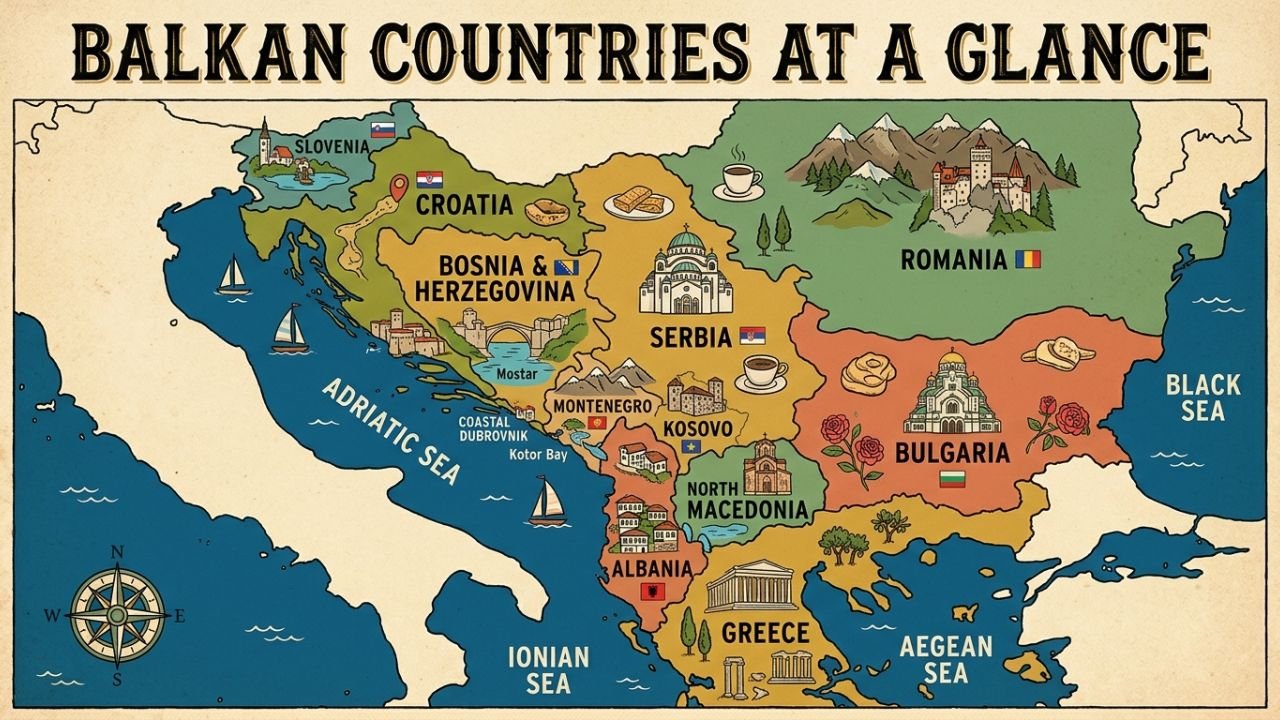
| Country | Cost level | Currency | Schengen member |
| Albania | Budget | Lek | No |
| Bosnia & Herzegovina | Budget | Convertible mark | No |
| Bulgaria | Budget to mid | Euro | Yes |
| Croatia | Higher | Euro | Yes |
| Kosovo | Budget | Euro | No |
| Montenegro | Mid | Euro | No |
| North Macedonia | Budget | Denar | No |
| Serbia | Budget to mid | Dinar | No |
| Slovenia | Higher | Euro | Yes |
Group Tours and Hiking Trips in the Balkans
If planning feels like too much, a Balkans group trip can help. Many operators run small-group tours of roughly 8 to 16 days that cover four to seven countries. Transport, hotels and a guide are handled for you.
Group tours work well if you:
- Want a simple, fixed price
- Are traveling alone and like meeting people
- Do not want to drive on mountain roads
Self-guided trips work better if you:
- Want to stay longer in places you love
- Are traveling with kids and need a flexible pace
- Want to cut costs with local buses and guesthouses
Hikers have strong options too. Popular areas include Durmitor and the Tara Canyon in Montenegro, Theth and Valbona in Albania, the Seven Rila Lakes in Bulgaria, and the trails at Plitvice. A tour of the Balkans built around hiking is best in late spring through early fall, when high trails are clear. Always check trail conditions locally before you set out.
Best Balkan Countries for a Two-Week Route
Two weeks is enough for three or four bases. Trying to see more means too many long travel days. These three routes are a good place to start.
Classic First-Timer Route: Croatia, Montenegro, Bosnia, Serbia
This route follows the coast first, then heads inland.
- Dubrovnik and the Croatian coast: 4 to 5 days
- Kotor and Budva in Montenegro: 3 days
- Mostar and Sarajevo in Bosnia: 4 days
- Belgrade in Serbia: 3 days
It balances beaches, history and city life. Expect higher costs in Croatia and Montenegro, and lower costs once you reach Bosnia and Serbia.
Value Route: Albania, North Macedonia, Kosovo
This is the budget-friendly pick. It suits travelers who want low prices and fewer crowds.
- Tirana, Berat and the Albanian Riviera: 6 days
- Ohrid and Skopje in North Macedonia: 4 days
- Pristina and Prizren in Kosovo: 3 to 4 days
Buses connect the main cities. A rental car gives more freedom in the mountains and along the coast.
Bulgaria-Plus Route: Bulgaria, North Macedonia, Greece
This route mixes history with a final stop on the Greek coast.
- Sofia, Rila Monastery and Plovdiv: 6 days
- Skopje and Ohrid in North Macedonia: 4 days
- Thessaloniki in Greece: 3 to 4 days
Bulgaria and Greece both use the euro. That keeps money simple on the longest legs of the trip.
When to Visit the Balkans in 2026
The best time to go depends on what you want to do. For most trips, late spring and early fall win.
| Season | What to expect | Best for |
| April to early June | Mild weather, green hills, fewer crowds | City breaks, hiking, road trips |
| Mid June to August | Hot, busy, highest prices on the coast | Beaches, festivals, high mountains |
| September | Warm sea, thinner crowds | Coast and island stops |
| October to November | Quiet, cooler, some seasonal closures | Cities and culture |
| Winter | Cold, snowy in the mountains | Sarajevo, Sofia and ski resorts |
May, June and September give the best balance of weather and value. In July and August, book beach stays early and plan inland days for the cooler morning hours.
Costs, Entry Rules and Getting Around
Typical Costs
The Balkans are cheaper than much of Western Europe, but not evenly. One 2026 backpacker budget tool lists typical daily costs of about $34 in North Macedonia, $35 in Albania, $37 in Bosnia, $54 in Montenegro, $69 in Croatia and $84 in Slovenia. Mid-range travelers should plan for more, especially on the coast in summer.
Entry Rules for 2026
Entry rules depend on your passport, so check your government’s official travel page. For US citizens, short visa-free stays are available in Serbia, North Macedonia, Montenegro, Bosnia and Kosovo. Albania is also visa-free for short stays.
Two more points matter for 2026:
- Croatia, Slovenia and Bulgaria are in Schengen. Visitors from outside the EU now register fingerprints and a photo under the EU’s Entry/Exit System, which can add time at the border.
- The EU’s ETIAS travel authorization has been delayed. Check the official EU site before you book, because the start date can change.
Non-Schengen countries such as Albania, Bosnia and Montenegro track your days separately from the Schengen 90 days in 180 days rule.
Getting Around
Buses are the cheapest way to cross the region, and they link most major cities. A rental car is useful for national parks, the Albanian Riviera and small towns. If you plan to cross borders, ask your rental company about its cross-border policy first.
Money-Saving Tips
- Travel in May, June or September to avoid peak coastal prices
- Stay in guesthouses and family-run apartments
- Eat where locals eat, and try set lunch menus
- Use a regional eSIM instead of paying roaming fees
- Mix one higher-cost country with two or three budget ones
- Take cash for small towns, even if cards work in cities
My Final Recommendation
If you want one answer, pick Bosnia & Herzegovina for a first serious trip. It offers deep history, beautiful old towns and nature, all at friendly prices. Pair it with Montenegro and Croatia for sea views, and your route is set.
If beaches and savings matter most, go to Albania. If you want an easy, family-friendly trip and can pay more, choose Slovenia and Croatia. For a quiet, different experience, add North Macedonia, Bulgaria or Kosovo.
Conclusion
The best Balkan countries to visit are the ones that match how you like to travel. Use the quick picks to narrow your list, choose a two-week route that fits your budget, and travel in the shoulder season for better prices. Check entry rules and exchange rates close to your departure date, since both can change.
Frequently Asked Questions
What is the best Balkan country to visit for first-timers?
Bosnia & Herzegovina is a strong first pick because it combines history, culture, nature and low prices. If you want easier logistics, Croatia and Slovenia are simpler but cost more.
Which Balkan country is the cheapest to visit?
North Macedonia, Albania, Bosnia and Kosovo are among the lowest-cost options. Croatia and Slovenia are the most expensive in the region.
How many days do you need in the Balkans?
Ten to fourteen days works well for three or four bases. With one week, stick to one country or two close neighbors, such as Montenegro and Albania.
Is the Balkans safe for tourists?
Most visitors have trouble-free trips. Watch for pickpockets in busy areas, stay on marked trails in rural Bosnia, and check your government’s latest travel advice before you go.
Do I need a visa for the Balkans?
Many nationalities can visit without a visa for short stays, but rules differ by country and passport. Check each country’s official site, and note that Schengen rules apply in Croatia, Slovenia and Bulgaria.
Which currency should I use in the Balkans?
The euro is used in Croatia, Slovenia, Bulgaria, Montenegro and Kosovo. Albania, Bosnia, North Macedonia and Serbia use their own currencies, so withdraw small amounts from ATMs as you go.
Which Balkan countries are best for beaches?
Albania, Montenegro and Croatia have the best coastlines. Albania is the cheapest of the three, while Croatia offers the most polished island and beach options.


- Be Respectful
- Stay Relevant
- Stay Positive
- True Feedback
- Encourage Discussion
- Avoid Spamming
- No Fake News
- Don't Copy-Paste
- No Personal Attacks
- Be Respectful
- Stay Relevant
- Stay Positive
- True Feedback
- Encourage Discussion
- Avoid Spamming
- No Fake News
- Don't Copy-Paste
- No Personal Attacks
