Fiji Weather Month by Month: Best Time to Visit in 2026
Published: 24 Oct 2026
When is the best time to visit Fiji? For most families, the answer is May to October. These months bring sunny skies, lower humidity, and calm seas. They are also the busiest and most expensive months.
But the dry season is not the only good choice. The wet season has lower prices, green scenery, and fewer crowds. It also has cyclone risk and heavy showers.
This guide explains Fiji weather month by month. You will see what each season feels like, what it costs in crowds and prices, and which months suit beach days, snorkeling, and kids. You will also get packing tips and money-saving advice.
When Is the Best Time to Visit Fiji? The Quick Answer
The best time to visit Fiji for weather is the dry season, from May to October. Expect warm days, cooler evenings, and little rain.
The best time for value is often April, early May, or November. These shoulder months have decent weather and lower prices than peak season.
Here is a simple way to choose:
- Best weather: June to September
- Best balance of weather and price: May, late October, and November
- Cheapest rates: January to March (with more rain and cyclone risk)
- Best for school holiday trips: Check your school dates first, then book early
Fiji Climate Overview
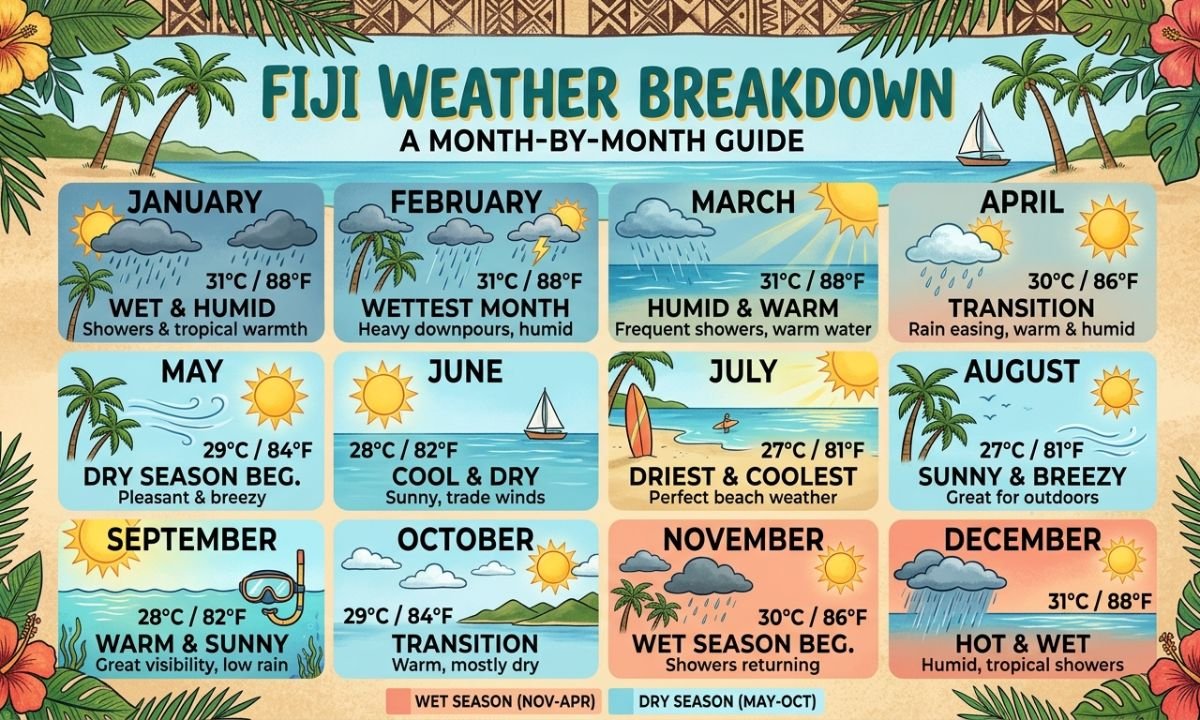
Fiji has a tropical maritime climate. It is warm all year, and the sea stays warm too. There are two main seasons instead of four.
- Dry season (May to October): This is Fiji’s winter. It has lower humidity, steadier sunshine, and light trade winds.
- Wet season (November to April): This is Fiji’s summer. It is hotter and more humid, with frequent showers and storms.
Temperatures across the year mostly stay between the low 20s and low 30s °C (about 70 to 90°F). Humidity is the bigger change. The wet season feels sticky. The dry season feels fresh.
Rain also depends on where you stay. The northern and western sides of the main islands, including Nadi, Denarau, and the Mamanuca Islands, are usually drier. The southeast, including Suva, gets more rain.
Fiji Cyclone Season
The tropical cyclone season runs from November to April. The risk is highest from about January to March. Most storms form over open water, and many never hit the islands directly. But they can cause flight delays, rough seas, and resort closures.
If you travel in these months, buy travel insurance and choose flexible bookings. Check warnings from the Fiji Meteorological Service before and during your trip.
Fiji Weather Month by Month
Use this table for a quick view. Details for each month follow below.
| Month | Season | What to Expect | Crowds and Prices |
| January | Wet | Hot, humid, heavy rain, cyclone risk | Low to moderate (holiday spike early) |
| February | Wet | Very humid, storms possible | Low |
| March | Wet | Still rainy, easing late in month | Low |
| April | Shoulder | Rain fades, more sunshine | Low to moderate (Easter spike) |
| May | Dry | Clear skies, comfortable humidity | Moderate |
| June | Dry | Sunny, cooler nights | High |
| July | Dry | Driest and sunniest, school holidays | Highest |
| August | Dry | Dry, breezy, festival month | High |
| September | Dry | Warm, calm, great for water sports | High |
| October | Dry to shoulder | Last dry month, rain starts to return | Moderate |
| November | Shoulder | Warmer, more showers | Low to moderate |
| December | Wet | Hot, humid, holiday rush | High around Christmas |
Fiji in January
January sits in the middle of the wet season. Days are hot and humid, and downpours can last for hours. Cyclone risk is real this month.
The upside is lower prices once the New Year rush ends. Pack flexible plans, and keep indoor options like cultural visits and resort kids’ clubs in mind.
Fiji in February
February is one of the most humid months. Showers are frequent, and the sea can be rough. Some small operators and remote resorts reduce services.
It can still work for a budget resort stay. Choose a larger resort with pools and covered activities.
Fiji in March
March is still wet, but the weather slowly improves toward the end. You may get more sunny breaks than in February. Cyclone risk remains.
Prices stay low. Families who can handle some rain often find good deals now.
Fiji in April
April is the bridge between seasons. Rain becomes lighter and less frequent. Many days are sunny with a short shower in the afternoon.
Easter can bring local travel and higher rates. Outside that week, April is a smart shoulder season choice.
Fiji in May
May is the start of the dry season, and many travel writers call it the best month overall. Skies clear up, humidity drops, and prices have not reached the July peak.
It is a great month for snorkeling, island hopping, and relaxed beach days.
Fiji in June
June is sunny and pleasant, and the high season begins. Evenings feel cooler, so a light layer is useful.
Book family rooms and popular island transfers early. Good places fill up fast.
Fiji in July
July is among the driest and sunniest months. It is also one of the busiest, since many school holidays fall in this period.
Expect the highest prices of the year. If this is your only option, book flights and resorts many months ahead.
Fiji in August
August keeps the dry weather. Trade winds can be breezy, which keeps the heat comfortable.
This is also a good month for culture. The Hibiscus Festival is usually held in Suva in August, with music, food, and family fun. Check the official dates before booking.
Fiji in September
September is warm, dry, and calm. Crowds begin to ease after the July and August rush.
It is one of the best months for diving, snorkeling, and boat trips. Many families find it the sweet spot for weather.
Fiji in October
October is the last dry month. Rain starts to creep back late in the month, but days are still mostly pleasant.
Fiji Day falls on October 10, so expect local celebrations. Prices are often better than in the peak months.
Fiji in November
November is the start of the wet season, though it feels more like a transition. You get warmer days, more humidity, and short showers.
It can be a lovely time to visit if you want quieter beaches. Keep in mind that cyclone season has officially begun.
Fiji in December
December is hot and humid with regular rain. It is also a popular holiday period, so crowds and rates rise around Christmas and New Year.
Book early if you plan to travel then. Pack for sudden storms and plenty of sun.
Fiji Winter Temperature: What to Expect from May to October
Fiji winter temperature is mild, not cold. Daytime highs are often around 26°C (about 79°F), with cooler evenings. Some nights feel fresh, especially near the coast with a breeze.
The sea stays warm enough for swimming all year. Winter water can feel a little cooler than summer water, but kids usually still love it.
In short, winter in Fiji is the season of comfort. You get beach weather without the heavy, sticky air.
Peak Season, Shoulder Season, and Off-Season in Fiji

Peak Season (May to October: Dry Season with Less Humidity)
Peak season brings the best weather. Skies are clear, rain is light, and seas are calmer. This is the best time to visit Fiji for first-timers and for families who want a low-stress trip.
The tradeoff is cost and crowds. July is usually the busiest, and December also spikes for holidays. Plan and book early.
- Pros: Sunshine, low humidity, calm water, easy island hopping
- Cons: Higher prices, full resorts, limited family rooms
Shoulder Season (April, Late October, and November)
Shoulder months give you a mix of good weather and better prices. You may see a few showers, but you will also see many sunny days.
These months suit travelers who want value without giving up a good holiday.
- Pros: Lower rates, fewer crowds, flexible availability
- Cons: Some rain, early cyclone season risk in November
Off-Season (December to March)
The off-season is the wet, hot, and humid part of the year. Deals are common, and the landscape is green. Waterfalls look their best.
But weather can disrupt plans. Boat trips may be canceled, and some remote resorts close or cut back.
- Pros: Lowest prices, quiet beaches, lush scenery
- Cons: Heavy rain, cyclone risk, rough seas, lower water visibility
Best Time to Visit Fiji for Specific Activities
Your plans can change the right month. Use this guide.
| Activity | Best Months | Why |
| Beach days and swimming | May to October | Sunny, dry, comfortable heat |
| Snorkeling and diving | May to October | Clearer water and calmer seas |
| Island hopping (Mamanucas, Yasawas) | May to October | Smoother boat rides |
| Hiking and waterfalls | May to June, Sept to Oct | Dry trails, cooler air |
| Cultural events | August to October | Festivals and national celebrations |
| Budget trips | January to March, November | Lower rates |
| Whale watching | Roughly July to October | Humpbacks pass through some Pacific waters |
| Manta ray encounters | Roughly May to October | Best seen in the Yasawa area in dry months |
For whales and mantas, confirm timing with your tour operator. Wildlife patterns can change from year to year.
Best Time for Families With Kids
Families usually do best from May to October because the weather is easier for young kids. Less humidity means less fatigue and fewer heat problems.
If budget matters more, try April or November. Choose a resort with a kids’ club, shaded pools, and short airport transfers.
What to Pack by Season
Packing is simple in Fiji. Think light clothes, sun protection, and swimwear.
Dry Season Packing List (May to October)
- Swimsuits and quick-dry shorts
- Light cotton tops
- A light jacket or sweater for evenings
- Reef-safe sunscreen, hat, and sunglasses
- Water shoes for rocky beaches
- Insect repellent
- A dry bag for boat trips
Wet Season Packing List (November to April)
- Everything above, minus the heavy layers
- A light rain jacket or poncho
- Extra quick-dry clothes
- Waterproof phone case
- Plastic bags for wet items
- Travel insurance documents
- Extra mosquito protection
For kids, add a spare swimsuit, a small first aid kit, and any needed medicine. Pack carefully if you plan to visit remote islands, since shops are limited there.
Pro Tips for Choosing the Best Time to Visit Fiji
- Check school dates first. July and December can sell out quickly.
- Book early for peak months. Family rooms are limited.
- Pick the right side of the island. Nadi and the Mamanucas tend to be drier.
- Buy travel insurance. This matters most from November to April.
- Stay flexible. Choose refundable rates in cyclone season.
- Plan buffer days. Weather can delay flights and boat trips.
- Watch festival dates. Events can be fun, but they also raise demand.
- Bring cash for small islands. Card machines may not always work.
- Follow official advice. Check the Fiji Meteorological Service and your airline before travel.
- Look at the whole trip cost. A cheap month may cost more if activities get canceled.
Common Mistakes to Avoid
- Booking only by price without checking weather
- Skipping insurance in wet season
- Packing no rain gear in November or April
- Waiting too long to book July
- Planning a tight schedule with no spare days
The Bottom Line
The best time to visit Fiji for most families is May to October. You get dry weather, lower humidity, and easy beach days. For a better balance of price and weather, choose April, late October, or November.
The wet season is cheaper and greener, but it comes with storms and cyclone risk. If you go then, stay flexible and buy insurance. Use this Fiji weather month by month guide to match your dates to your budget and travel style.
Frequently Asked Questions
What is the cheapest time to go to Fiji?
January to March is usually the cheapest. Prices rise during school holidays and peak dry months, so compare dates before you book.
What is the rainy season in Fiji?
The rainy season runs from November to April. It is hot and humid with frequent showers. Rain can still happen in the dry season, but it is lighter.
Is Fiji safe to visit during cyclone season?
Many people travel in cyclone season without problems, but storms can disrupt plans. Use insurance, choose flexible rates, and follow local warnings.
What is the hottest month in Fiji?
The hottest and most humid months are usually January and February. Winter months from June to August are cooler and more comfortable.
What is the best month for snorkeling in Fiji?
May to October is generally best because water is calmer and clearer. Check with local operators for current conditions at your island.
How many days do you need in Fiji?
Seven to ten days works well for many families. That gives you time for a mainland base and one or two island stays.
Is Fiji good for kids all year?
Yes, with the right planning. Dry season is easiest for young children, while wet season needs indoor backups and flexible plans.
Do I need a different plan for each Fiji island?
Yes, a little. Island weather and boat conditions can vary, so check forecasts for your exact area.






- Be Respectful
- Stay Relevant
- Stay Positive
- True Feedback
- Encourage Discussion
- Avoid Spamming
- No Fake News
- Don't Copy-Paste
- No Personal Attacks
- Be Respectful
- Stay Relevant
- Stay Positive
- True Feedback
- Encourage Discussion
- Avoid Spamming
- No Fake News
- Don't Copy-Paste
- No Personal Attacks
