Bordeaux Wine Country Guide: Best Routes and Wineries
Published: 21 Oct 2026
Bordeaux wine country is easier to visit than most people expect. The city sits in the middle of the famous wine regions. Saint-Émilion, the Médoc, Graves and Sauternes are all a short train ride or drive away.
The hard part is choosing. Each region tastes and feels different, and you cannot do everything in one trip. This guide gives you a clear plan. You will see how many days you need, the best time to go, where to stay, and a simple four-day route. You will also find costs, beginner tips and the mistakes to avoid.
Bordeaux Wine Country Itinerary at a Glance
Here is the short version. Pick the row that matches your time.
| Trip length | Best plan |
| 2 days | One day in Bordeaux city, one wine day in Saint-Émilion or the Médoc |
| 3 days | Two days in the city, one wine day trip |
| 4 days | City, Saint-Émilion, Médoc or Graves, plus one flexible day |
| 5 days | Add Sauternes and Arcachon Bay without rushing |
Quick answer: For a first visit, plan four days. Spend one in the city, one in Saint-Émilion, one in the Médoc or Graves, and one on a flexible day.
How Many Days Do You Need in Bordeaux Wine Country?
Three days is a common minimum: two in the city and one on a wine day trip. That works if you only want a taste of the region.
Four days feels better. You get a calm pace and one extra region. Five days lets you add Sauternes or the coast.
Families should add a buffer day. Kids need breaks, and château visits run long. A slow day in the city keeps the whole trip enjoyable.
Best Time to Visit Bordeaux Vineyards
Late spring and early autumn suit most travelers. The weather is mild, the vines are green or golden, and the terraces are open.
Here is how the seasons compare.
| Season | What to expect |
| Spring (April to June) | Mild days, green vines, fewer crowds |
| Summer (July to August) | Warm, busy, best for the coast |
| Autumn (September to October) | Harvest season, golden vines, lively atmosphere |
| Winter (November to March) | Quiet, lower prices, fewer tour departures |
Winter works if you want peace. Some tours run less often then. One local tour, for example, drops to a single weekly Saint-Émilion departure from November to March.
Book château visits ahead in September and October. Many estates are busy during harvest.
Where to Stay in Bordeaux
Most visitors do best staying in the city. You can reach every wine region from here, and you have more restaurants, trams and trains. Three areas stand out.
Golden Triangle and Old Town: Easiest for First-Timers
This is the classic center. You are close to the Grand Théâtre, the shops and the river. It is walkable and well connected by tram.
Rooms cost more here. It is still the simplest base if this is your first trip.
Chartrons: Best Neighborhood for Wine Atmosphere
Chartrons was once the home of wine merchants. Today it has antique shops, wine bars and quiet streets. It feels local and relaxed.
It suits couples and adults who want evening wine time. Families can enjoy it too, thanks to its calm pace.
Saint-Michel and Capucins: Best Value and Food Access
This area is lively and good for budgets. The Capucins market is nearby, so breakfast and picnic supplies are easy. Rooms are often cheaper than in the center.
The streets can be noisy at night. Check recent reviews before you book.
Walking Tours of Bordeaux
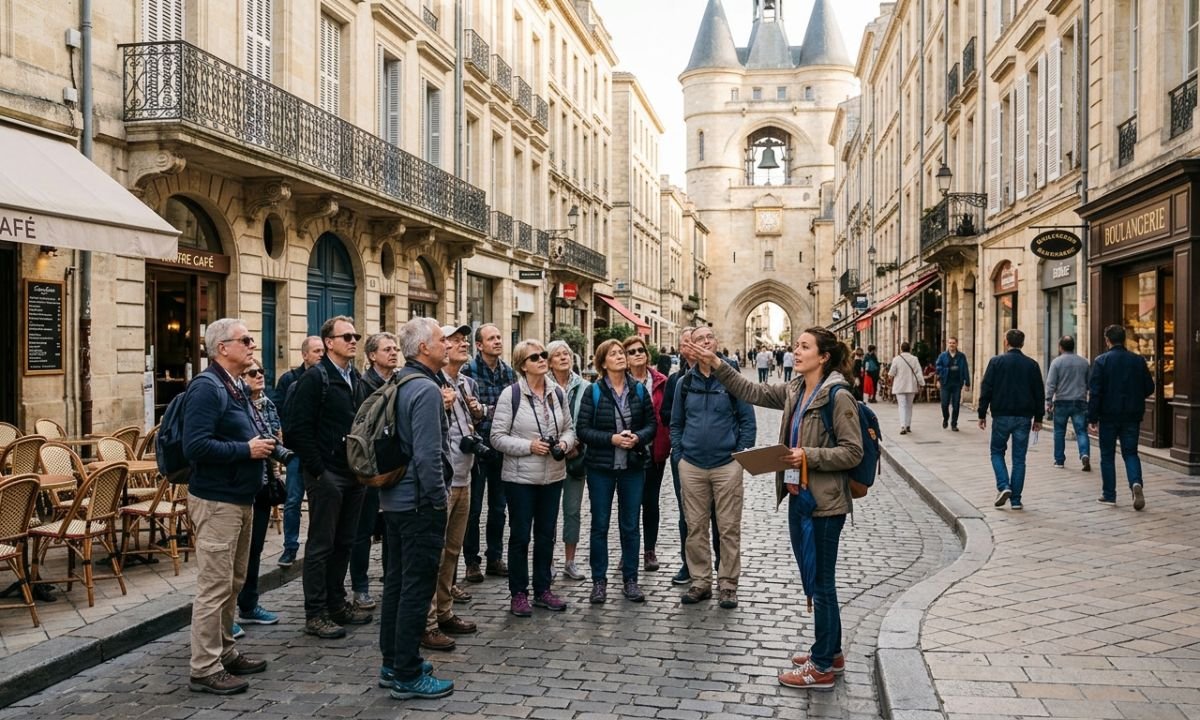
Spend your first morning on foot. A guided walking tour is the fastest way to understand the city’s wine history. You will see the old merchant quarter, the quays and the main squares.
Free and paid tours run daily. Many last about two hours. Book a morning slot so you stay fresh for the afternoon.
You can also walk alone. Start at the Place de la Bourse, follow the river, then cut into the old town.
Getting Around Bordeaux and the Vineyards
The city is easy without a car. The tram network covers the center. Trains from Bordeaux Saint-Jean reach nearby wine towns. Trains from Paris take just over two hours.
Here is how the main options compare.
| Destination | Best way | Travel time |
| Saint-Émilion | Regional TER train | About 35 minutes |
| Médoc châteaux | Tour or car | About 45 to 60 minutes |
| Graves and Sauternes | Tour or car | Varies by château |
| Arcachon Bay | Regional TER train | About 50 minutes |
Most Médoc, Graves and Sauternes estates are not on a train line. A car or a small-group tour works best there. If you drive, nominate a driver. Tasting rooms pour generously.
Tourist office tours often run on set weekdays. Departures commonly rotate between the Médoc, Graves and Sauternes, and Saint-Émilion. Check the schedule before you plan your days.
Day 1: Bordeaux City, Chartrons and Your First Wine Bar
Start with a walking tour in the morning. Then eat lunch near the Capucins market.
In the afternoon, visit La Cité du Vin. It is a wine museum near the river. Adult tickets were listed at €23, with €10 for ages 6 to 17 and free entry under 6. Entry includes a belvedere with a 360-degree view and a tasting glass of 50 ml. Children can usually have grape juice instead. Prices change, so confirm on the official website.
You can reach it by tram. The nearest stop is La Cité du Vin on line B.
End the day in Chartrons. Pick a wine bar, order a flight and ask for local recommendations.
Day 2: Saint-Émilion for the Right Bank Classic
Saint-Émilion is the easiest wine day trip. The village is small, stone-built and listed as a UNESCO site. It sits among vineyards that mostly grow Merlot.
Take a morning train. The station is about 1.7 km from the village, a scenic walk past vines. Wear comfortable shoes. The streets are steep and cobbled.
Plan your day like this:
- Walk the village and climb to the viewpoints.
- Visit the underground monolithic church on a guided tour.
- Eat a long lunch.
- Book one or two château tastings for the afternoon.
Book château visits ahead. Many need a reservation.
Day 3: Médoc Châteaux or Graves if You Want Less Driving
The Médoc is the Left Bank heartland. It includes four famous communes: Saint-Estèphe, Pauillac, Saint-Julien and Margaux. Expect Cabernet-based reds and grand estates.
Pick the Médoc if you want famous names and big landscapes. The drive takes about an hour each way, so it makes a full day.
Choose Graves if you prefer a shorter drive. It starts near the city’s southern edge. It is known for both reds and dry whites. Pessac-Léognan is the best-known part.
A tour is worth it on this day. You skip the driving and get access to estates that book groups.
Day 4: Capucins Market, Cité du Vin, Arcachon or Sauternes
Use your last day to match your mood. Choose one option below.
Option A: Arcachon Bay and Dune du Pilat
This is a good family day. Take the train to Arcachon, then walk to the seafront. Try oysters, relax on the beach or ride a bike along the bay.
The Dune du Pilat is the star. Access is free for pedestrians and cyclists. The climb involves a staircase of 160 steps. Go early or late in the day to avoid the midday heat and traffic. From Arcachon station, take a local bus or rent a bike. Check the current bus number before you go.
Option B: Sauternes and Barsac
Sauternes is famous for sweet wine. The wines taste rich and honeyed. Many first-timers have never tried them properly, so this is a great surprise.
You will probably need a car or tour. Book ahead. Pair a tasting with a slow lunch.
Option C: Slow Bordeaux Day
Not every day needs a château. Walk the quays, browse the Capucins market and visit the Bassins des Lumières art space. Add a river walk and an early dinner.
This is the best choice for tired kids or anyone who wants a rest day.
What Bordeaux Wine Beginners Should Know
You do not need to be an expert. A few basics make everything easier.
- Left Bank: Médoc and Graves, mostly Cabernet Sauvignon blends.
- Right Bank: Saint-Émilion and Pomerol, mostly Merlot.
- Sauternes: sweet white wines.
- Appellation: the official name of a wine area, shown on the label.
- Château: the winery estate, not always a real castle.
Ask for small pours and use the spittoon. You will taste more wines and stay clear-headed. Do not worry about asking basic questions. Guides expect them.
Bordeaux Trip Costs for First-Timers
Costs vary by season, hotel and tour style. Here are the verified examples. Always check current prices before booking.
| Item | Approximate cost |
| Cité du Vin, adult ticket | €23 (listed 2026 price) |
| Train to Saint-Émilion, return | About €12 when booked online (2026 estimate) |
| Train to Arcachon, return | About €10 (2026 estimate) |
| Dune du Pilat entry | Free on foot |
| Château tastings, tours, hotels | Vary widely, so check each provider |
Ways to save money:
- Stay in Saint-Michel or near Capucins.
- Use trains for Saint-Émilion and Arcachon.
- Share a small-group tour or private driver among family members.
- Buy picnic lunches at the market.
- Visit outside harvest season for lower room rates.
Common Bordeaux Wine Country Mistakes
Avoid these and your trip will run smoothly.
- Trying to see everything in two days. Pick one or two regions.
- Not booking château visits. Many need advance reservations.
- Driving after tasting. Hire a driver or take a tour.
- Planning tastings on closed days. Many estates close on Sundays or at lunchtime. Confirm each opening time.
- Skipping the train. Saint-Émilion and Arcachon are easy without a car.
- Packing the wrong shoes. Cobblestones and sand call for sturdy footwear.
- Forgetting kids’ options. Choose estates that welcome families and offer grape juice.
How I’d Plan Bordeaux Wine Country
Here is the simple plan I recommend to most first-timers.
- Base yourself in the Golden Triangle or Chartrons.
- Spend day one in the city, with a walking tour and La Cité du Vin.
- Take the train to Saint-Émilion on day two.
- Join a small-group tour of the Médoc or Graves on day three.
- Use day four for Arcachon, Sauternes or a slow city day.
This plan balances famous names, easy transport and downtime. It also leaves room for surprises.
Conclusion
Bordeaux wine country rewards a little planning. Choose your base, mix city time with vineyard days and match each region to your interests. Four days gives you a relaxed pace with Saint-Émilion, the Médoc or Graves, and one flexible day.
Book château visits early, use trains where you can and leave time to simply enjoy the food and views. Confirm prices and opening times before you go, since they change often.
Frequently Asked Questions
Do I need a car to visit Bordeaux wine country?
Not always. Trains reach Saint-Émilion and Arcachon. For the Médoc, Graves and Sauternes, a small-group tour or private driver is easier.
What is the best wine region for first-time visitors?
Saint-Émilion is the easiest. It is close, charming and works well by train. The Médoc suits visitors who want famous châteaux.
Can I visit Bordeaux vineyards with kids?
Yes, with some planning. Choose family-friendly estates, keep tastings short and add city or beach time. La Cité du Vin offers grape juice as an alternative to wine.
How far is Saint-Émilion from Bordeaux?
It is about 35 minutes by regional train from Bordeaux Saint-Jean. The station is a short walk from the village.
What is Sauternes known for?
Sauternes produces sweet white wines with a honeyed taste. They pair well with desserts and strong cheeses.
Is September a good month to visit?
Yes, it is a popular month. The harvest atmosphere is exciting, but hotels and tours get busy. Book early.
Can I do Bordeaux wine country as a day trip from Paris?
It is possible but tiring. The trip is a little over two hours each way by train, so an overnight stay is much better.






- Be Respectful
- Stay Relevant
- Stay Positive
- True Feedback
- Encourage Discussion
- Avoid Spamming
- No Fake News
- Don't Copy-Paste
- No Personal Attacks
- Be Respectful
- Stay Relevant
- Stay Positive
- True Feedback
- Encourage Discussion
- Avoid Spamming
- No Fake News
- Don't Copy-Paste
- No Personal Attacks
