1 Week Japan Itinerary: 7 Days in Tokyo, Kyoto and Osaka
Published: 27 Oct 2026
Japan is big, and one week goes fast. The good news is that a well-planned 1 week Japan itinerary can still cover Tokyo’s neon streets, Kyoto’s old temples, and Osaka’s famous street food, without spending half your trip on trains.
This guide gives you a seven-day route you can follow almost step by step. You start in Tokyo, ride the bullet train to Kyoto, take a side trip to Nara, and finish in Osaka.
You will also find a Disneyland swap, a budget breakdown, transport costs, hotel advice, and a food list. Prices and rules in Japan change often, so we checked recent figures where we could. Please confirm costs on official sites before you book.
The Big Picture: How This 1 Week Japan Itinerary Works
This route runs in a straight line from east to west: Tokyo, then Kyoto, then Osaka. You never double back, and you only change hotels twice. That keeps your 7 days in Japan focused on sightseeing instead of packing.
| Day | Sleep in | Main focus |
| 1 | Tokyo | Arrive, Shinjuku, Shibuya |
| 2 | Tokyo | Asakusa, Akihabara, Harajuku |
| 3 | Tokyo | teamLab, Shibuya Sky, Tsukiji |
| 4 | Kyoto | Shinkansen, Arashiyama, Gion |
| 5 | Kyoto | Fushimi Inari, temples, Philosophers’ Path |
| 6 | Osaka | Nara day trip, then Osaka |
| 7 | Depart | Osaka Castle, Kuromon Market, final bites |
Is One Week in Japan Enough?
Yes, for a first trip. Seven days is enough to see the classic highlights of three cities, often called the Golden Route. It is not enough for Hiroshima, Hakone, or Mt. Fuji as well, so save those for a longer visit.
Best Time to Go
Late March to early April (cherry blossom season) and November (autumn leaves) are the most popular times. They are also the busiest, so book hotels and key tickets early.
Summer is hot and humid. Winter is cooler and usually quieter, which can be a good choice for families who dislike crowds.
Entry Rules and Fees to Know Before You Fly
Many passports, including those from the US, UK, Canada, and Australia, can enter Japan visa-free for short stays. The allowed time depends on your passport, so check Japan’s Ministry of Foreign Affairs website.
Here are a few recent changes worth knowing:
- Visit Japan Web is a free online service that speeds up immigration and customs. It is recommended but optional.
- JESTA, a future online pre-entry system, has been passed into law but is not running yet. Avoid any site that offers to process it now.
- The departure tax rose to 3,000 yen per person on July 1, 2026. It is normally included in your airfare.
- Tax-free shopping changes on November 1, 2026. Reports say tourists will pay the full price and claim a refund at the airport.
Day-by-Day Itinerary
Day 1: Arrive Tokyo, Shinjuku and Shibuya
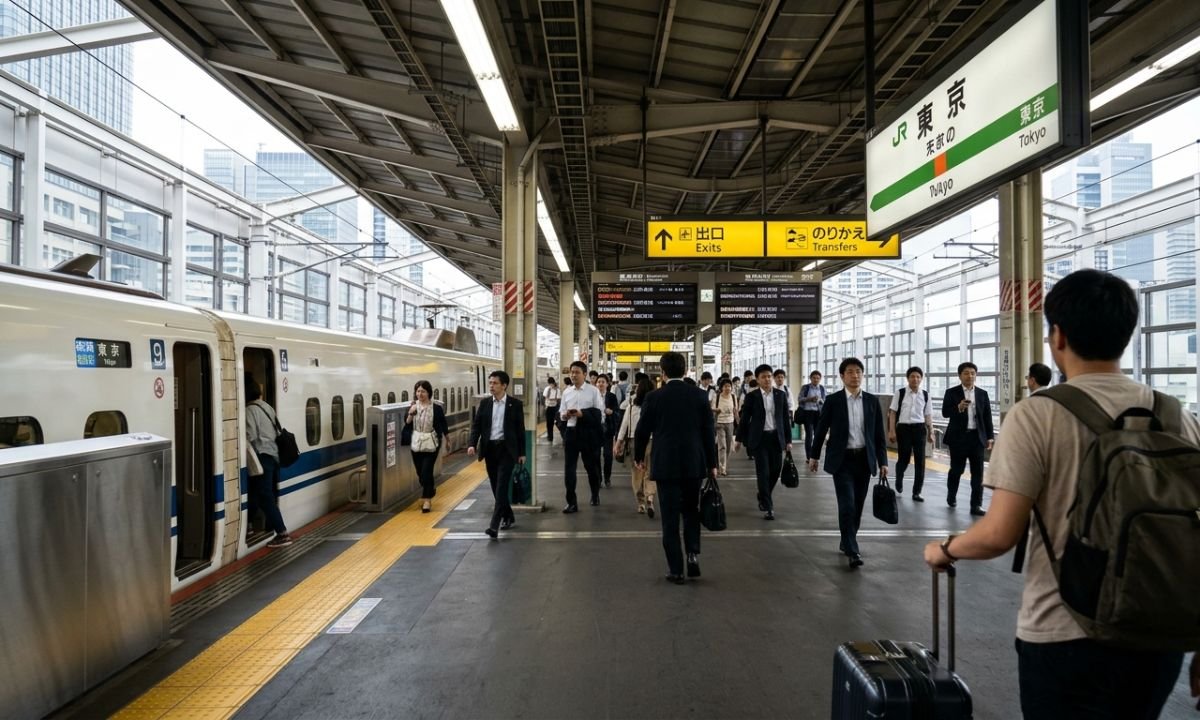
How much you do today depends on your flight time and jet lag. Keep it light. Haneda Airport is closer to the city than Narita, so it can save you a long ride after a long flight.
After you check in, head to Shinjuku. Walk the lantern-lit alleys of Omoide Yokocho and see the bright signs of Kabukicho. If you want a free view, the Tokyo Metropolitan Government Building has an observation deck.
Then take a short ride to Shibuya. Watch the famous Shibuya Crossing from a nearby cafe or from the station area, and say hello to the Hachiko statue.
- Eat an early dinner and go to bed on time.
- Buy a Suica or similar IC card for trains and snacks.
- Save your big sights for the next two days.
Day 2: Full Day Tokyo, Asakusa, Akihabara, Harajuku
Start early at Senso-ji in Asakusa, Tokyo’s oldest temple. Mornings are calmer, and you can browse Nakamise-dori for snacks and small gifts before the crowds arrive.
Next, go to Akihabara for arcades, anime shops, and electronics. Kids and teens often love the game centers here.
In the afternoon, visit Harajuku. Walk down Takeshita Street for crepes and street fashion, then escape into the quiet forest paths of Meiji Shrine. The contrast is one of the best parts of Tokyo.
Day 3: Tokyo, teamLab, Shibuya Sky, Tsukiji
Begin with breakfast at the Tsukiji Outer Market. Many stalls sell tamagoyaki (sweet rolled omelet), grilled seafood, and fresh fruit on sticks. Go in the morning, because many stalls close in the early afternoon.
Then head to teamLab Planets in Toyosu. It is a walk-through digital art museum, and the entrance is about a minute from Shin-Toyosu Station. Recent listings show adult tickets from around 3,600 to 4,200 yen, with higher prices on weekends. It has been reported open through the end of 2027.
Book a timed slot in advance, because popular times sell out. You walk barefoot and some rooms have knee-deep water, so wear shorts or pants that roll up easily.
End the day with sunset at Shibuya Sky, an open-air rooftop deck about 229 meters above the crossing. Recent listings show online adult tickets from about 2,700 yen before 3 pm and about 3,400 yen from 3 pm, but figures vary by source. Check the official site and book early for sunset.
Day 4: Shinkansen to Kyoto, Arashiyama and Gion
Take the Shinkansen (bullet train) from Tokyo Station to Kyoto. The fastest Nozomi trains take about 2 hours and 15 minutes. Reserve seats ahead, and pick up an ekiben (station bento box) for the ride.
On the way, sit on the right side of the train if you want a chance to see Mt. Fuji on a clear day. Drop your bags at your hotel, then go to Arashiyama.
- Walk through the Arashiyama Bamboo Grove (free).
- Visit Tenryu-ji Temple and its garden.
- Cross Togetsukyo Bridge for river and mountain views.
In the evening, stroll through Gion, Kyoto’s historic geisha district. Be respectful here. Do not chase or block anyone for photos, and note that fines have been reported for photographing in some private alleys.
Day 5: Full Day Kyoto, Temples, Fushimi Inari, Philosophers’ Path
Visit Fushimi Inari Taisha first, before the crowds build. It is free, and its thousands of red torii gates are best seen in the early morning. You do not need to hike the whole mountain. Many families walk up for 30 to 45 minutes and turn back.
Next, go to Kiyomizu-dera and walk the old lanes of Higashiyama, including Sannenzaka and Ninenzaka. These streets have tea shops, sweets, and souvenir stalls.
In the afternoon, follow the Philosophers’ Path, a calm canal-side walk lined with trees. It connects well with temples such as Ginkaku-ji and Nanzen-ji. Pick one or two, and do not try to see everything.
Day 6: Day Trip to Nara, Then Train to Osaka
Take a morning JR train from Kyoto to Nara, which takes about 45 minutes. Start at Todai-ji, home to the Great Buddha, one of Japan’s most famous temple halls.
Then wander through Nara Park (free), where friendly deer roam. You can buy deer crackers from vendors. Keep food hidden otherwise, because the deer can nudge and nibble, and small children may find that scary.
In the afternoon, take a train to Osaka, which takes roughly an hour. Check in, then head to Dotonbori at night for glowing signs, canal views, and your first takoyaki.
Day 7: Osaka, Castle, Kuromon Market, Final Bites
Visit Osaka Castle in the morning. The park is free, but the main tower costs about 1,200 yen for adults. The tower closes around 5 pm in regular seasons, so confirm hours before you go.
Later, go to Kuromon Market for a food crawl. Try grilled seafood, fruit, and small snacks, then finish with a last okonomiyaki or ramen lunch.
Most visitors then head to Kansai International Airport. Allow plenty of time. If your flight leaves from Tokyo instead, the Shinkansen from Osaka takes about two and a half hours.
Japan Itinerary 7 Days With Disneyland
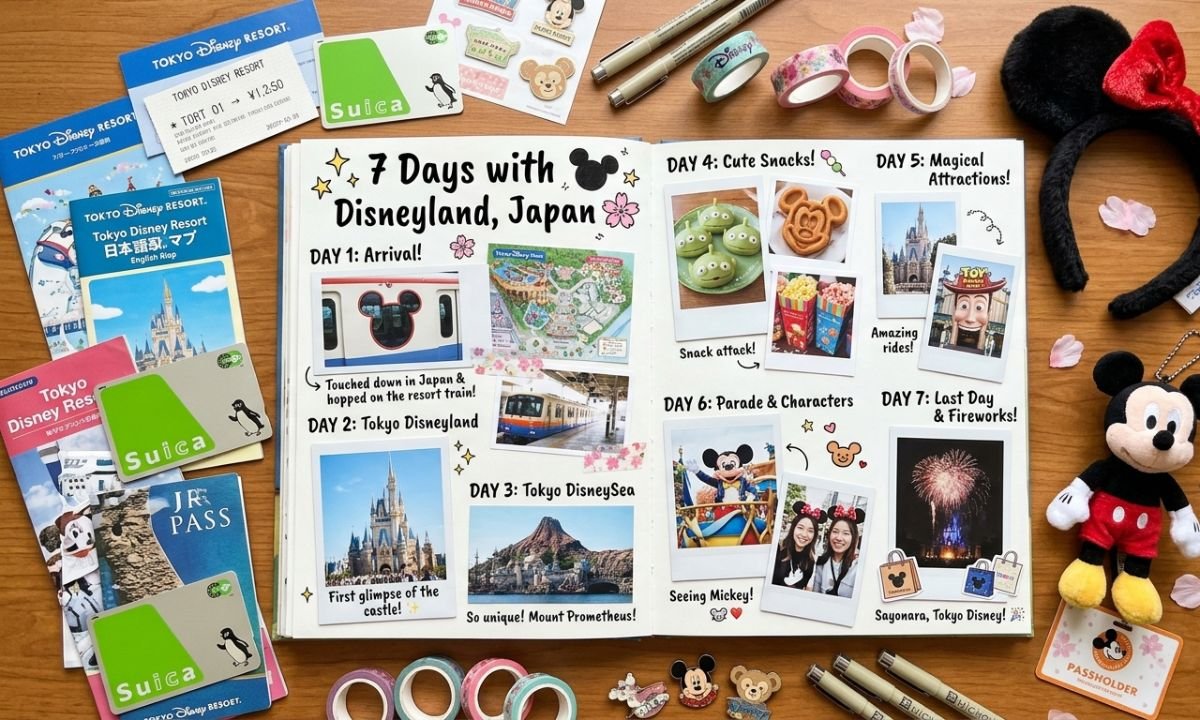
Tokyo Disney Resort has two parks, Tokyo Disneyland and Tokyo DisneySea. A one-day ticket covers one park, so most families pick one for a 7-day trip. Many families choose Disneyland for younger kids and DisneySea for teens and adults.
The easiest way to add it is to swap out Day 3. Skip Tsukiji and teamLab, and spend the day at the parks. Then move Shibuya Sky to the evening of Day 2, since Harajuku is next to Shibuya.
| Disney detail | What to know |
| Adult 1-day ticket | Roughly 7,900 to 10,900 yen on most dates in 2026, with a new top price of 12,400 yen from October 2026 |
| Child (4 to 11) | Roughly 4,700 to 5,900 yen, depending on the date |
| Pricing | Changes by date, so weekdays are usually cheaper |
| Buying tickets | Online only through the official website or app, with no gate sales |
| Park Hopper | Offered only during limited periods, so check before assuming it is available |
Here are a few tips for the Disney day:
- Buy tickets as soon as your dates are set.
- Choose a weekday if you can.
- Arrive before opening.
- Take the train to Maihama Station, which is the closest stop.
- Keep the next morning easy, since the Shinkansen day follows.
Japan Itinerary 7 Days on a Budget
Visiting Japan on a budget is very doable. Transport and big attractions have fixed costs. Food and hotels are where you can save the most.
| Item | Recent cost | Saving tip |
| Shinkansen, Tokyo to Kyoto | About 14,000 yen one way | Skip the JR Pass on this route |
| Kyoto to Osaka (JR) | A few hundred yen | Use an IC card |
| teamLab Planets | About 3,600 to 4,200 yen | Book weekday slots |
| Shibuya Sky | About 2,700 to 3,400 yen | Book online before 3 pm |
| Osaka Castle tower | About 1,200 yen | Enjoy the free park if you skip the tower |
| Senso-ji, Fushimi Inari, Nara Park, Bamboo Grove | Free | Make these the core of your week |
More ways to save:
- Eat breakfast at a konbini (convenience store). The egg sandwiches and rice balls are excellent.
- Choose lunch set meals, called teishoku, which are often cheaper than dinner.
- Stay in business hotels or family rooms near train stations.
- Walk more, and ride less, in compact areas like Higashiyama and Dotonbori.
- Note that Kyoto’s lodging tax has risen, so check the final hotel price.
Flights and hotels will be your biggest costs. Compare dates, since spring and autumn cost more.
Transport Overview: Getting Around Japan
Trains do almost everything in a 1 week Japan itinerary. The Shinkansen links the three cities, and local trains and subways handle the rest.
Shinkansen and Local Trains
Book a reserved seat on the Shinkansen for Day 4. Nozomi and Hikari trains are the fast options. In Tokyo, Kyoto, and Osaka, subway and JR lines will take you to nearly every stop in this plan.
IC Cards
A Suica or PASMO card works across Tokyo, Kyoto, and Osaka, and ICOCA works in the Kansai area. Load it once and tap in and out. You can also use it at vending machines and many shops.
Do You Need a JR Pass?
For this route, usually no. Recent comparisons show individual tickets for Tokyo, Kyoto, Osaka, and back cost roughly 29,000 to 31,000 yen.
| Option | Cost | Verdict |
| Individual tickets | About 29,000 to 31,000 yen for this route | Best for this plan |
| 7-day JR Pass | 50,000 yen at the standard price (some overseas sellers raised prices in October 2026) | Only worth it if you add far-off cities like Hiroshima |
Luggage Tips
Large suitcases are a pain on crowded trains. Many travelers use luggage forwarding services to send bags between hotels, and pack a small daypack for the Shinkansen day. Check JR’s rules for oversized bags, since very large suitcases may need a reserved space.
Where to Stay
Choose hotels near train stations. Japanese hotel rooms are small, so families should look for family rooms or apartment-style stays.
| City | Good area | Why |
| Tokyo | Shinjuku or Shibuya | Great transit and plenty of food |
| Tokyo (value) | Ueno or Asakusa | Often calmer, with easy airport links |
| Kyoto | Near Kyoto Station | Fast access to the Shinkansen and buses |
| Kyoto (atmosphere) | Gion or Higashiyama | Walkable to old streets, but busier |
| Osaka | Namba or Dotonbori | Best for food and nightlife |
| Osaka (transit) | Umeda or Shin-Osaka | Easy trains and bullet train access |
If you want one special night, book a ryokan (traditional inn) in Kyoto. Many include dinner and futon beds. Check the rules for children in advance.
What to Eat: Non-Negotiables
Food is a top reason people love Japan. Try these on your trip:
| Dish | Where | Why try it |
| Ramen | Tokyo | Rich broth and endless local styles |
| Conveyor-belt sushi | Anywhere | Fun and easy for kids |
| Tamagoyaki | Tsukiji | Sweet, fluffy omelet on a stick |
| Matcha sweets | Kyoto | Ice cream, mochi, and parfaits |
| Takoyaki | Osaka | Hot octopus balls with sauce |
| Okonomiyaki | Osaka | Savory pancake cooked on a griddle |
| Kushikatsu | Osaka | Fried skewers (never double-dip in the shared sauce) |
Picky eaters can fall back on udon, gyoza, curry rice, and konbini onigiri. If your family has food allergies, carry a translated allergy card.
Planning This Trip Faster With AI
AI planning tools can save hours of research. They work best as a first draft, not as the final word.
Try these prompts:
- Group these sights by neighborhood so I walk less.
- Build a rainy-day backup for each day.
- Suggest a kid-friendly lunch near each stop.
- Translate this menu and flag common allergens.
Always double-check the details. AI can get opening hours, ticket prices, and train times wrong. Confirm everything on official websites, especially for popular tickets like teamLab, Shibuya Sky, and Disney.
Final Tips
- Carry some cash. Many small shops and stalls still prefer it.
- Expect few public trash cans. Keep a small bag for your garbage.
- Keep your voice low on trains.
- Do not tip. It is not expected in Japan.
- Wear comfortable shoes you can slip off easily.
- Book timed tickets early for teamLab, Shibuya Sky, and Disney.
- Get an eSIM or pocket Wi-Fi for maps and translation.
- Leave a little free time each day. Rest makes a 1 week Japan itinerary more fun, not less.
Conclusion
Seven days is enough to see the best of Japan for a first trip. You get Tokyo’s energy, Kyoto’s temples, a Nara deer park, and Osaka’s food, all linked by comfortable trains.
Use this 1 week Japan itinerary as a base, then adjust it to your family. Swap in Disneyland, trim the temple list, or slow the pace. Book the popular tickets first, skip the JR Pass unless you add far-off cities, and confirm every price before you go.
Frequently Asked Questions
Is 1 week enough to see Japan?
It is enough for a first taste. A week covers Tokyo, Kyoto, and Osaka well. You will need more time for places like Hiroshima, Hakone, or Hokkaido.
Can you do Tokyo, Kyoto, and Osaka in 7 days?
Yes. A common split is three nights in Tokyo, two in Kyoto, and one in Osaka, with a Nara day trip from Kyoto or Osaka.
Is the JR Pass worth it for one week?
Usually not for Tokyo, Kyoto, and Osaka alone. Individual tickets cost much less than the 50,000 yen pass. It starts to make sense when you add several long Shinkansen trips.
Do I need a visa for Japan?
Many nationalities can visit visa-free for short stays. Check your own passport’s rules on the Ministry of Foreign Affairs website. Visit Japan Web is optional, and JESTA is not active yet.
Should I fly into Tokyo and out of Osaka?
It is a smart idea because it avoids backtracking. Compare open-jaw ticket prices. If it costs much more, you can take the Shinkansen back to Tokyo instead.
How do I fit Disneyland into a 7-day trip?
Replace Day 3 in Tokyo with a park day. Buy tickets online in advance, and move Shibuya Sky to another evening.
When is the best time to visit Japan?
Spring and autumn offer the best weather and scenery, but they bring crowds and higher prices. Winter is quieter, and summer is hot.
How much does a week in Japan cost?
It depends mostly on flights and hotels. Use the budget table above for fixed costs like trains and attractions, then compare current hotel prices for your dates.





- Be Respectful
- Stay Relevant
- Stay Positive
- True Feedback
- Encourage Discussion
- Avoid Spamming
- No Fake News
- Don't Copy-Paste
- No Personal Attacks
- Be Respectful
- Stay Relevant
- Stay Positive
- True Feedback
- Encourage Discussion
- Avoid Spamming
- No Fake News
- Don't Copy-Paste
- No Personal Attacks
