How to Travel Japan on a Budget: Affordable Travel Tips for Every Traveler
Published: 13 Oct 2026
Japan has a reputation as an expensive country. It does not have to be. With the right plan, you can travel Japan on a budget and still ride bullet trains, see ancient temples, and eat very well.
This guide covers the biggest costs: trains, beds, and food. You will also find free attractions, money-saving tools, a 7-day Tokyo, Kyoto, and Osaka itinerary, and a total cost estimate. Prices are approximate and change often, so confirm key fares before you book.
Table of Contents
Understanding Japan’s Budget Landscape
Japan travel costs split into four main parts: flights, transport inside Japan, lodging, and food. Flights vary most by where you start. The other three are where smart planning pays off.
A careful budget traveler can often get by on roughly $40 to $80 per day, not counting flights. That covers a cheap bed, simple meals, local transit, and a few paid sights. The figures in this guide use about ¥150 per US dollar as a rough guide, so check today’s rate.
Three habits keep costs low:
- Travel in the off-season when you can. Avoid Golden Week (late April to early May), Obon (mid-August), and peak cherry blossom weeks.
- Use cheap intercity options like highway buses instead of defaulting to the bullet train.
- Eat where locals eat, not where tourists queue.
The JR Pass: Is It Still Worth It in 2026?
Short answer: for most travelers, no. The nationwide Japan Rail Pass jumped in price in October 2023. Overseas prices rise again from 1 October 2026, with the 7-day Standard pass going from ¥50,000 to ¥53,000. One source notes that the official online reservation price is expected to stay the same, so check the price where you plan to buy.
The only test that matters is simple. Add up the fares for the JR trips you will actually take in the pass window. If that total beats the pass price, buy it.
When the JR Pass IS Worth It
The pass can pay off if you:
- Plan three or more long Shinkansen rides in seven days (for example Tokyo, Kanazawa, Kyoto, Hiroshima, and back).
- Are doing a 14-day multi-region trip that includes areas like Tohoku or Kyushu.
- Want the freedom to hop on any eligible JR train without buying tickets each time.
Children aged 6 to 11 pay half price, which helps families.
When to Skip the JR Pass
Skip it if you:
- Stay mostly in Tokyo, or only do Tokyo and Kyoto.
- Use buses, subways, and private railways for most trips.
- Travel slowly, since the pass runs on consecutive days.
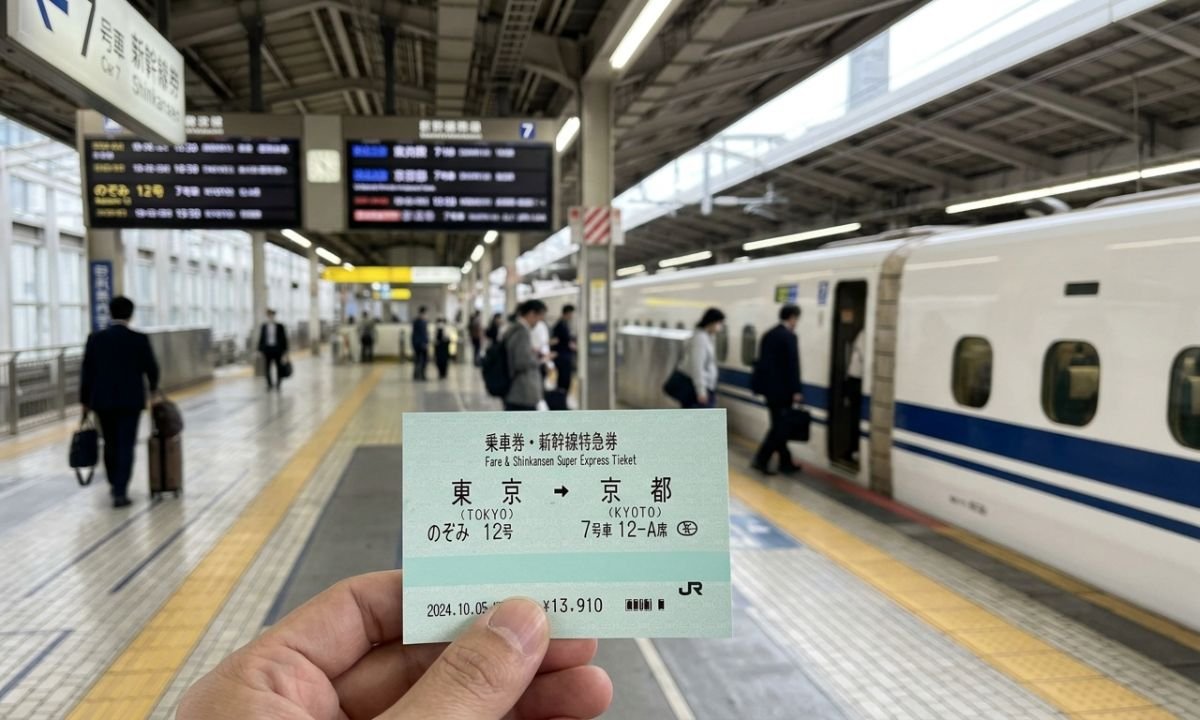
Also know that the fastest Nozomi trains are not covered by the pass. A Tokyo to Kyoto round trip alone does not come close to justifying the cost.
The Highway Bus Alternative
Highway buses are the best cheap way to cover long distances. Overnight Tokyo to Kyoto buses usually cost about ¥3,500 to ¥5,000 and leave around 10 or 11 pm, arriving at roughly 6 or 7 am. The trip takes about 7 to 9 hours.
Compare that with the bullet train, which costs roughly ¥13,000 to ¥15,000 one way depending on seat type and train.
| Option | Tokyo to Kyoto time | Approx. one-way cost |
| Nozomi Shinkansen | About 2 hr 15 min | ¥13,000 to ¥15,000 |
| Highway bus (overnight) | 7 to 9 hours | ¥3,500 to ¥5,000 |
An overnight bus also replaces a hotel night, so your real savings are bigger than the ticket gap. Book early through operators such as Willer Express, Japan Bus Lines, or JR Bus. Choose a seat with more recline if you want to sleep.
Accommodation: Where to Sleep for $15-40
Lodging is the easiest place to cut costs. Japan has several cheap, clean, and safe options. Book early for busy seasons, since the cheapest beds sell out first.
Capsule Hotels: $15-30 Per Night
Capsule hotels give you a small private pod with a bed, light, and outlet. Bathrooms and baths are shared. They are great for solo travelers and couples sleeping separately. Many are split by gender, and some have age limits, so check the rules first.
Hostels: $20-35 Per Night
Hostels in Tokyo, Kyoto, and Osaka are well run and social. Dorm beds are cheapest. Some offer private or family rooms, which can still beat a hotel on price.
Manga Cafes (Manga Kissa): $15-25 Per Night
Manga cafes rent small booths or flat-seat rooms, often with a reclining chair, free drinks, and showers. They suit a late arrival or an emergency night. They are not the most comfortable choice, and many have age restrictions at night.
Business Hotels: $40-70 Per Night
Business hotels are the best pick for families and anyone who wants privacy. Rooms are small but clean, with a private bath. Twin and triple rooms often cost less per person than two separate beds elsewhere.
| Lodging type | Typical price per night | Best for |
| Capsule hotel | $15-30 | Solo travelers |
| Hostel | $20-35 | Solo travelers, groups |
| Manga cafe | $15-25 | Late arrivals, emergencies |
| Business hotel | $40-70 | Couples, families |
Eating in Japan on $12-20 Per Day
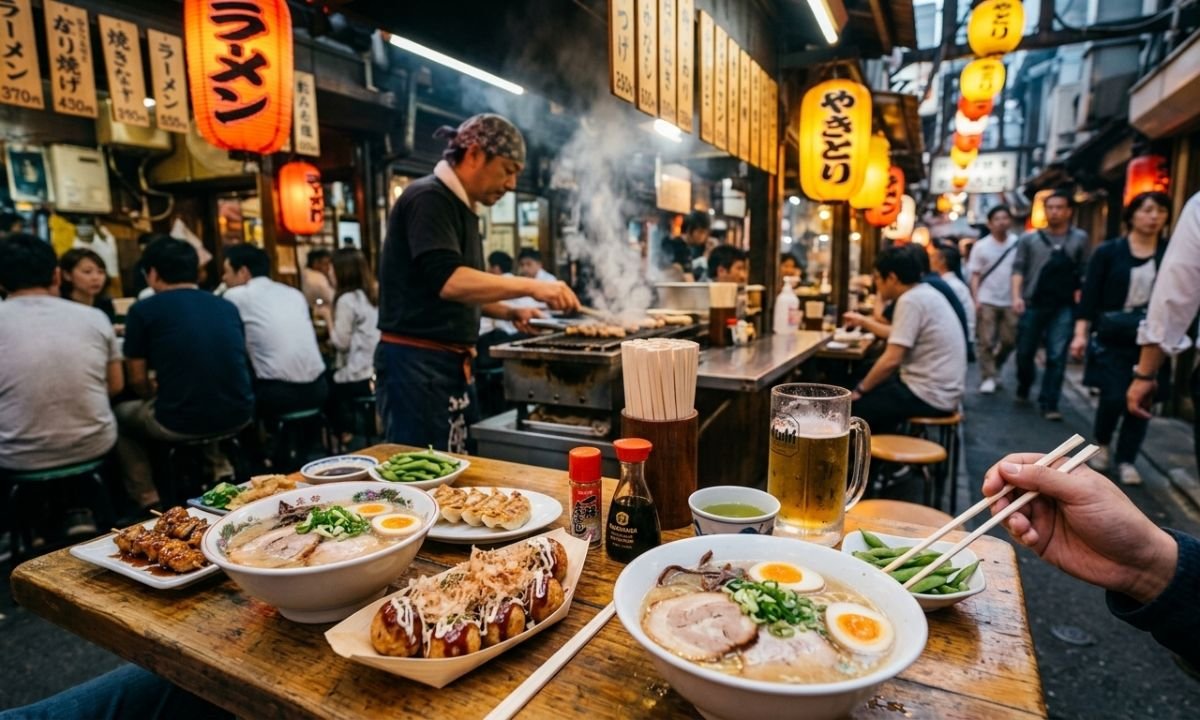
Food is where budget travel in Japan feels easy. Cheap meals are everywhere, and quality is high. Eating well on $12 to $20 a day is realistic with a mix of the options below.
Konbini (Convenience Store) Meals: $3-7 Per Meal
Konbini such as 7-Eleven, Lawson, and FamilyMart sell fresh onigiri, sandwiches, bento boxes, and hot snacks. They are great for breakfast and quick lunches. Many also have free seating areas.
Chain Restaurants: $4-8 Per Meal
Beef bowl and set meal chains like Matsuya, Yoshinoya, and Sukiya serve filling meals fast. Many use ticket machines with picture menus, which makes ordering easy. Free tea or water is standard.
Supermarket Discounts: The Evening Markdown
Supermarkets mark down fresh food in the evening, usually with yellow or red discount stickers. Sushi, tempura, and bento can drop by 20 to 50 percent. Shop after about 7 pm for the best picks.
100-Yen Shops: Beyond Snacks
Shops like Daiso, Seria, and Can Do sell more than snacks. Pick up water bottles, chopsticks, laundry bags, travel adapters, and small souvenirs. Prices are often ¥110 with tax, and some items cost more.
Standing Soba and Ramen
Standing soba shops near train stations serve a hot bowl in minutes, often for a few dollars. Budget ramen counters are also common. These are quick, local, and very cheap.
Free and Low-Cost Attractions
You can fill most days with free or cheap sights. Confirm entry fees on official sites, since they change.
Completely Free
- Senso-ji grounds and Nakamise Street (Asakusa, Tokyo)
- Meiji Shrine grounds (Harajuku, Tokyo)
- Shibuya Crossing and Shinjuku street views
- Tokyo Metropolitan Government Building observation decks
- Fushimi Inari Shrine and its torii gate trails (Kyoto)
- Gion district, Kamo River, and the Philosopher’s Path (Kyoto)
- Nara Park and its deer (park entry is free)
- Dotonbori at night (Osaka)
Under $10
Many famous temples charge small fees, often under ¥1,000. Examples include Kinkaku-ji and Kiyomizu-dera in Kyoto, and Todai-ji in Nara. Check current prices before you go.
Money-Saving Tools and Tips
A few simple tools make a big difference to your daily budget.
IC Cards (Suica / Pasmo / ICOCA)
IC cards work on trains, subways, and buses across most of Japan. Tap in and out, and top up as needed. Many also pay for konbini items and vending machines. Mobile versions work on some phones, and physical card supply has varied, so check what is available when you arrive.
Ekinet and SmartEX
Ekinet and SmartEX are online booking systems for Shinkansen tickets. SmartEX covers the Tokaido and Sanyo lines, including Tokyo to Kyoto. Booking online is often cheaper than buying at the station, and you can pick a reserved seat from your phone.
Free WiFi and SIM Cards
Free WiFi exists in stations, konbini, and many cafes, but it can be patchy. An eSIM or a prepaid SIM is usually cheaper and easier than pocket WiFi for one or two travelers. Buy before you go so you are connected on arrival.
Tax-Free Shopping
Rules are changing, so read this part carefully. From November 1, 2026, Japan’s tax-free system moves to a refund method, where visitors pay the full price including 10% tax first and claim it back before leaving. At departure, travelers complete the refund at electronic kiosks with their passport and show their purchases to customs. The ¥5,000 minimum at one store on one day still applies.
Purchases made before November 1 follow the old system, where tax is removed at the register. Keep your passport handy and keep tax-free goods with you when you leave.
7-Day Budget Itinerary: Tokyo, Kyoto, Osaka
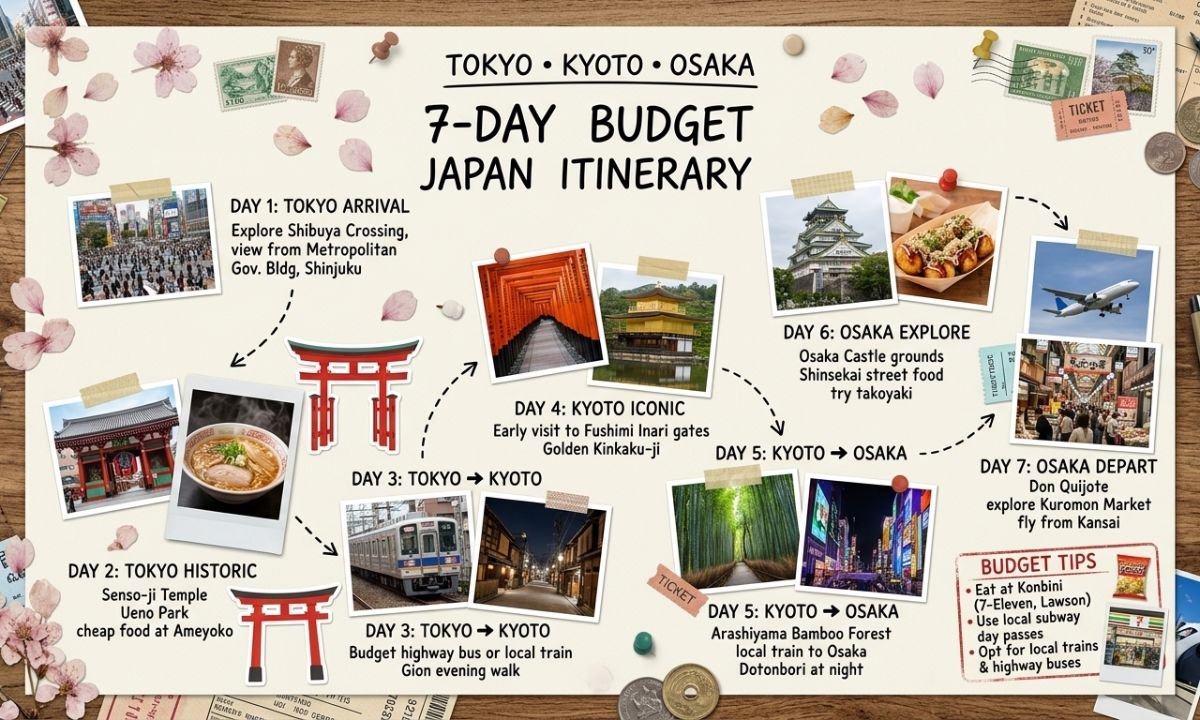
This plan mixes free sights with low-cost transport. It works for solo travelers, couples, and families who adjust the lodging.
Day 1: Arrive in Tokyo
Take the airport train or a cheaper bus to your lodging. Buy an IC card. Grab a konbini dinner and walk around your neighborhood to beat jet lag.
Day 2: Tokyo East Side
Visit Senso-ji and Nakamise Street, both free. Walk to Ueno Park and browse Ameyoko market for cheap snacks. Eat a chain beef bowl for lunch.
Day 3: Tokyo West Side
Start at Meiji Shrine, then stroll through Harajuku. See Shibuya Crossing and the free city views from the Tokyo Metropolitan Government Building. Use supermarket markdowns for dinner, then board your overnight bus if you are saving a hotel night.
Day 4: Tokyo to Kyoto
Ride the highway bus overnight or by day. Arrive, drop your bags, and walk Gion and the Kamo River. Try standing soba or a cheap set meal.
Day 5: Kyoto Temples
Go early to Fushimi Inari to avoid crowds. Visit Kiyomizu-dera or Kinkaku-ji for a small fee. End with the Philosopher’s Path.
Day 6: Day Trip to Nara
Take a short train to Nara. Walk Nara Park, meet the deer, and visit Todai-ji. Return to Kyoto for an easy evening.
Day 7: Kyoto to Osaka, Depart
Ride a quick, cheap train to Osaka. Spend a few hours in Dotonbori and street food spots. Head to Kansai Airport for your flight.
7-Day Total Budget Estimate
These estimates exclude international flights and use six nights of lodging.
| Category | Low estimate | Higher estimate |
| Lodging (6 nights) | $90 | $240 |
| Food | $84 | $140 |
| Transport (bus, local trains) | $80 | $130 |
| Attractions | $20 | $50 |
| Total | About $275 | About $560 |
Your real total depends on lodging choice, seasons, and how often you eat out.
Planning Your Japan Trip
A few planning steps protect your budget:
- Pick travel dates outside Golden Week, Obon, and peak blossom or fall color weeks.
- Book lodging and long-distance buses early.
- Decide on the JR Pass by adding up your actual train fares.
- Set up an eSIM and load an IC card or mobile version.
- Save a daily spending target and track it.
Families should look for business hotel triple rooms and use child discounts on trains.
Final Thoughts
It is very possible to travel Japan on a budget without feeling like you are missing out. Skip the JR Pass unless your route truly needs it. Use highway buses, sleep in capsule hotels, hostels, or business hotels, and eat at konbini, chains, and supermarkets. Fill your days with free temples, parks, and neighborhoods.
Budget travel in Japan is about smart choices, not giving things up. Plan ahead, check prices before you book, and you can enjoy a memorable trip at a fraction of what most people expect to spend.
Frequently Asked Questions
How much does a week in Japan cost on a budget?
Excluding flights, a careful traveler can spend roughly $275 to $560 for a week. Lodging type and how many paid sights you add make the biggest difference.
Is Japan expensive for tourists?
It can be, but it does not have to be. Cheap food, hostels, and free attractions keep daily spending low. Bullet trains and central hotels are what push costs up.
What is the cheapest way to get from Tokyo to Kyoto?
The overnight highway bus. Fares are usually around ¥3,500 to ¥5,000, and you save a hotel night.
What is the cheapest month to visit Japan?
Late winter and early summer outside holiday periods often bring lower prices and fewer crowds. Avoid Golden Week, Obon, and peak cherry blossom weeks.
Do I need cash in Japan?
Cards are widely accepted in cities, but small restaurants, shrines, and some local shops still prefer cash. Carry some yen for those cases.
Can I travel Japan on a budget with kids?
Yes. Children aged 6 to 11 pay half price on JR trains. Business hotels with triple or family rooms and cheap chain meals keep costs manageable.
Is tipping expected in Japan?
No. Tipping is not customary, which helps your budget.


- Be Respectful
- Stay Relevant
- Stay Positive
- True Feedback
- Encourage Discussion
- Avoid Spamming
- No Fake News
- Don't Copy-Paste
- No Personal Attacks
- Be Respectful
- Stay Relevant
- Stay Positive
- True Feedback
- Encourage Discussion
- Avoid Spamming
- No Fake News
- Don't Copy-Paste
- No Personal Attacks
