Rome on a Budget: Cheap Hotels, Food & Things to Do
Published: 24 Sep 2026
Rome has a reputation for being expensive, and if you only look at hotel websites near the Trevi Fountain, it can feel that way fast. But the truth is that Rome on a budget is completely doable, even for families. Many of the city’s best experiences, like wandering the Pantheon, tossing a coin in the Trevi Fountain, or getting lost in Trastevere, cost nothing at all.
This guide breaks down exactly what to expect to spend in Rome, where you can cut costs without cutting the fun, and which splurges are actually worth it. You will find a realistic daily budget, tips on cheap eats, free things to do, and the smartest way to get around the city without draining your wallet.
The Bottom Line: Daily Budget Breakdown
Before diving into the details, here is a realistic look at what a budget traveler might spend per day in Rome. These numbers assume a mid-range budget approach, not the absolute cheapest option available, since most families want comfort along with savings.
| Expense | Budget Option (per person/day) | Notes |
| Accommodation | €30 to €50 | Hostel dorm or budget hotel room, split by group |
| Food | €25 to €40 | Mix of pizza al taglio, trattorias, and picnics |
| Transport | €1.50 to €9 | Single ticket or a 24-hour pass |
| Attractions | €0 to €20 | Free sights plus one paid ticket |
| Extras (gelato, water, small souvenirs) | €5 to €10 | Easy to control |
For a family of four staying five nights, this generally works out to somewhere between €1,300 and €2,200 total, depending on the season and how many paid attractions you choose to visit. Prices climb noticeably in the summer months and around Easter, so traveling in spring or autumn stretches your budget further.
Affordable Accommodation
Where you stay has the single biggest impact on your Rome budget. The good news is that budget-friendly neighborhoods still put you within easy reach of the main sights.
Best budget-friendly areas to stay:
- Termini/Esquilino: Close to the main train station, well connected by metro and bus, and home to some of the most affordable hostels and small hotels in the city.
- San Lorenzo: A lively, local neighborhood popular with students, offering lower prices than the historic center.
- Trastevere (edges): Slightly pricier but full of character, with plenty of budget guesthouses just outside the busiest lanes.
- Prati: Near the Vatican, quieter than the center, with solid value for money.
Hostel dorm beds in Rome typically run from around €20 to €45 a night depending on season, while budget hotel rooms usually fall between €80 and €120 for a double in a central location. Prices spike heavily in June, July, and October, so booking well in advance makes a real difference.
Families traveling together often find that a budget aparthotel or a small guesthouse room works out cheaper per person than separate hostel beds, and it comes with the bonus of a kitchenette for saving on meals.
Eating Well for Less
Food is where a lot of travelers accidentally overspend in Rome, mostly by sitting down at restaurants right next to major landmarks. Walk two or three streets away from any tourist attraction and prices usually drop.
Must-Try Budget Eats
- Pizza al taglio: Pizza sold by weight from a tray, perfect for a quick and cheap lunch.
- Supplì: Fried rice balls with a molten mozzarella center, a classic Roman street snack.
- Trapizzino: A pocket of pizza dough stuffed with slow-cooked fillings like chicken cacciatore or eggplant parmigiana.
- Panini from a alimentari: A local grocery shop can make you a fresh sandwich for a few euros.
- Gelato from an artisanal gelateria: Look for natural colors and covered metal tins rather than bright, piled-high displays, which usually signal a more authentic, better value spot.
Money-Saving Food Tips
- Eat where locals eat. Trattorias one or two streets away from the main squares are almost always cheaper and often better.
- Skip the menu turistico near landmarks. These fixed tourist menus close to the Colosseum or Trevi Fountain tend to be lower quality and higher priced.
- Order coffee standing at the bar. In Italy, coffee prices are often different for sitting at a table versus standing at the counter, and standing is almost always cheaper.
- Buy water from a supermarket, not a kiosk. A bottle can cost three or four times more near a tourist site.
- Use Rome’s public drinking fountains. Known locally as nasoni, these free fountains provide clean, cold drinking water all over the city, so bring a refillable bottle instead of buying plastic ones.
- Try an aperitivo. Many bars offer a drink that comes with a buffet of snacks in the early evening, which can double as a light, affordable dinner.
Free and Cheap Things to Do
Rome is one of the best cities in Europe for sightseeing without spending much money, since so much of its history is simply out in the open.

Always free to visit:
- The Trevi Fountain
- The Spanish Steps
- The Pantheon’s exterior and, with advance booking, its interior
- Piazza Navona and its fountains
- The Trastevere neighborhood
- Villa Borghese gardens
- The view from the Gianicolo hill
- Walking across the Tiber River bridges at sunset
Free or discounted museum days: Many state museums and archaeological sites across Italy, including several in Rome, offer free entry on the first Sunday of every month. Some of Rome’s municipal museums also have free entry days for residents, and select sites occasionally waive fees for visitors under 18 or EU citizens under 25. Since rules and participating sites can change, it is worth checking the official Ministry of Culture or Turismo Roma websites before you go, and booking ahead where required.
Worth paying for: The Colosseum, Roman Forum, and Palatine Hill are sold together on one combined ticket, and while the exact price can shift from year to year, it is genuinely one of the best value paid experiences in the city given how much history it covers. Book online in advance directly through the official ticketing partner to avoid inflated reseller prices and long queue times.
If you plan to visit several paid sites, compare the cost of individual tickets against a city pass like the Roma Pass, which bundles public transport with entry to a set number of attractions. It is only worth buying if you will genuinely use several of the included sites within the pass’s validity window.
Getting Around Cheaply
Rome’s historic center is very walkable, and walking is free, but for longer distances or tired little legs, the public transport network run by ATAC covers buses, trams, and the metro on a single ticket type.
| Ticket | Validity | Best for |
| BIT (single ticket) | 100 minutes, one metro ride plus unlimited bus and tram transfers | A day with light travel plans |
| Roma 24h | 24 hours from first use | A full day of sightseeing across the city |
| Roma 48h / 72h | 48 or 72 hours | Multi-day visits with frequent trips |
| CIS (weekly pass) | 7 calendar days | Longer stays with daily travel |
As a rough rule, if you expect to take more than four or five rides in a day, a day pass usually saves money compared to buying single tickets each time. Validate your ticket the moment you board a bus or tram, or at the metro turnstile, since inspectors do check and fines apply for unvalidated tickets.
Other ways to save on transport:
- Walk between nearby attractions instead of taking short metro or bus rides. Many of Rome’s most famous sights, like the Pantheon, Piazza Navona, and the Trevi Fountain, sit within a fifteen minute walk of each other.
- Avoid unmetered taxis and always ask for an official white taxi with a visible meter, or use a licensed ride-hailing app.
- Skip the pricier Leonardo Express airport train if you are on a tight budget and compare it against the regional Trenitalia FL1 line or a shared shuttle, which can cost less for the same route from Fiumicino.
Pro Tips for Saving Even More
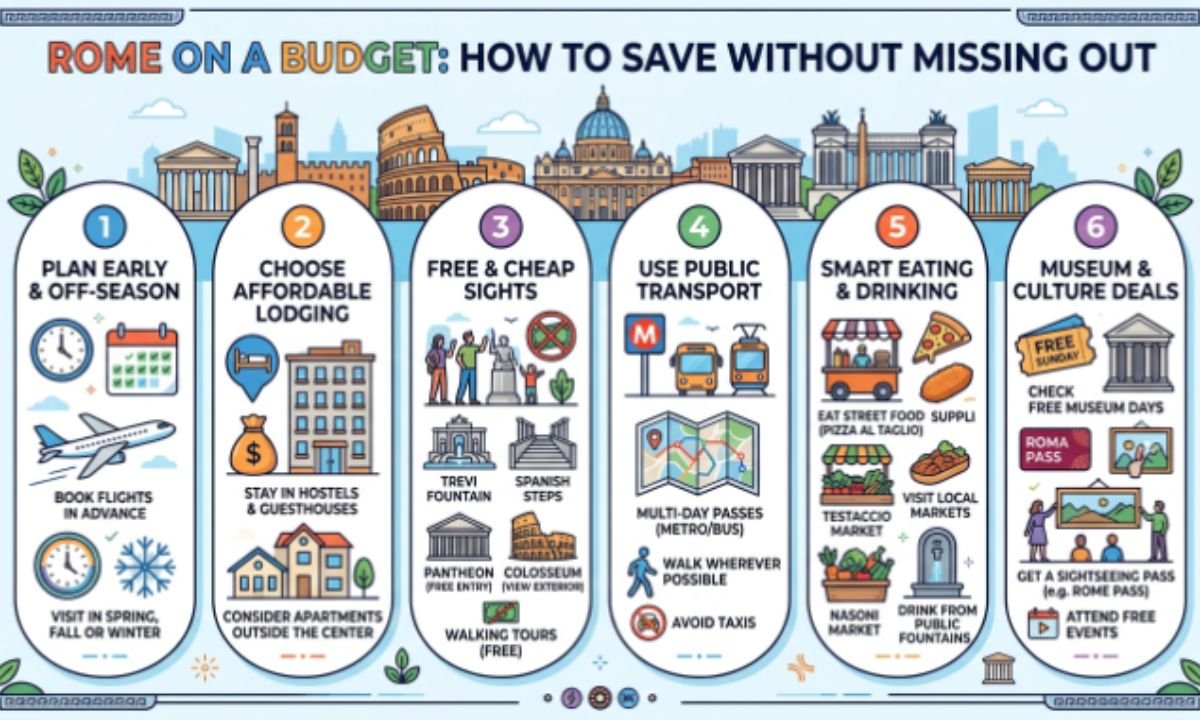
- Travel in shoulder season. Late April to early June and September to October offer good weather with lower accommodation prices than peak summer.
- Pack a refillable water bottle. With Rome’s free public fountains everywhere, this alone can save a noticeable amount over a week-long trip.
- Picnic with a view. Buying bread, cheese, and fruit from a local market and eating in a park like Villa Borghese costs a fraction of a restaurant meal.
- Book skip-the-line tickets in advance. This is not just about time. Avoiding a wasted afternoon in line means you avoid an impulse decision to buy an overpriced guided tour just to skip the queue.
- Use a prepaid or no-fee travel card. Avoid dynamic currency conversion at card machines, and choose to pay in euros rather than your home currency to get a fairer exchange rate.
- Set a daily cash limit. Withdrawing larger amounts less often from an ATM, rather than small amounts repeatedly, usually reduces the fees you pay overall.
Is Rome Worth It on a Budget?
Yes, and arguably Rome rewards budget travelers more than most European capitals. So many of its defining experiences, from wandering ancient ruins in the open air to people watching in a sunlit piazza, do not require an entrance fee at all. With a bit of planning around accommodation, food, and transport, a family can experience the best of the city without needing a luxury budget.
The key is being intentional. Choose one or two paid attractions that matter most to you, lean on free sights and neighborhoods for the rest of your days, and eat the way locals do rather than the way tourist menus suggest. Rome on a budget does not mean a lesser trip. It often means a more authentic one.
Conclusion
A trip to Rome does not need to come with a luxury price tag to feel special. By choosing budget-friendly neighborhoods, eating the way Romans do, using public transport wisely, and taking full advantage of the city’s many free sights, you can experience everything that makes Rome unforgettable without overspending. Plan ahead, stay flexible, and let Rome’s free piazzas, fountains, and golden evening light do most of the work.
Frequently Asked Questions
How many days do I need in Rome on a budget? Three to four days is enough to see the major highlights, including the Colosseum, Vatican area, and historic center, without feeling rushed or overspending on constant paid extras.
Is it cheaper to stay near the Colosseum or somewhere further out? Areas slightly outside the immediate historic center, like Termini or San Lorenzo, are usually cheaper for accommodation while still being well connected by public transport.
Do I need to pay for public transport in Rome, or can I walk everywhere? Rome’s center is very walkable, but if you are staying further out or have young children, a day or multi-day transport pass is usually worth the cost.
What is the cheapest time of year to visit Rome? Late autumn and winter, excluding the Christmas and New Year period, tend to have the lowest accommodation prices, though some outdoor experiences are more pleasant in spring or early autumn.
Are museums free in Rome? Some state and municipal museums offer free entry on the first Sunday of each month, and certain sites reduce or waive fees for younger visitors. Rules vary by site, so check official sources before planning around this.
Is tipping expected in Rome? Tipping is not mandatory in Italy. Many restaurants add a small cover charge (coperto) to the bill instead, so a large additional tip is not expected the way it is in some other countries.
What is the biggest money-saving mistake tourists make in Rome? Eating and drinking at cafes and restaurants directly next to major landmarks. Walking just a few streets away typically means better prices and often better food.





- Be Respectful
- Stay Relevant
- Stay Positive
- True Feedback
- Encourage Discussion
- Avoid Spamming
- No Fake News
- Don't Copy-Paste
- No Personal Attacks
- Be Respectful
- Stay Relevant
- Stay Positive
- True Feedback
- Encourage Discussion
- Avoid Spamming
- No Fake News
- Don't Copy-Paste
- No Personal Attacks
