Svalbard Travel Guide for Beginners: Tips, Attractions & Travel Essentials for First Time Visitors
Published: 28 Oct 2026
This Svalbard travel guide helps you plan a first trip to Norway’s Arctic archipelago without guesswork. Svalbard sits far north of the mainland, yet getting there is easier than most people expect. The hard parts are choosing the right season, setting a realistic budget, and respecting the polar bear rules.
Below you will find the best time to go, how to get there, where to stay, what things cost, and a simple 4-night plan. You will also find safety rules, a packing list, and answers to common questions. Prices and schedules change, so check with operators before you book.
Svalbard travel guide at a glance
| Topic | Quick answer |
| Main base | Longyearbyen, on the island of Spitsbergen |
| Getting there | Flights from Oslo or Tromsø with SAS or Norwegian |
| Flight time | About 3 hours from Oslo, about 1.5 hours from Tromsø |
| Entry | Bring a passport. Svalbard is outside the Schengen Area |
| Getting around | Walking, taxis, and guided tours. No public bus network |
| Typical first trip | 4 to 5 nights |
| Cost level | Very high. Tours are the biggest expense |
| Best seasons | March to May for snow, June to August for boats and midnight sun |
Where is Svalbard, exactly?
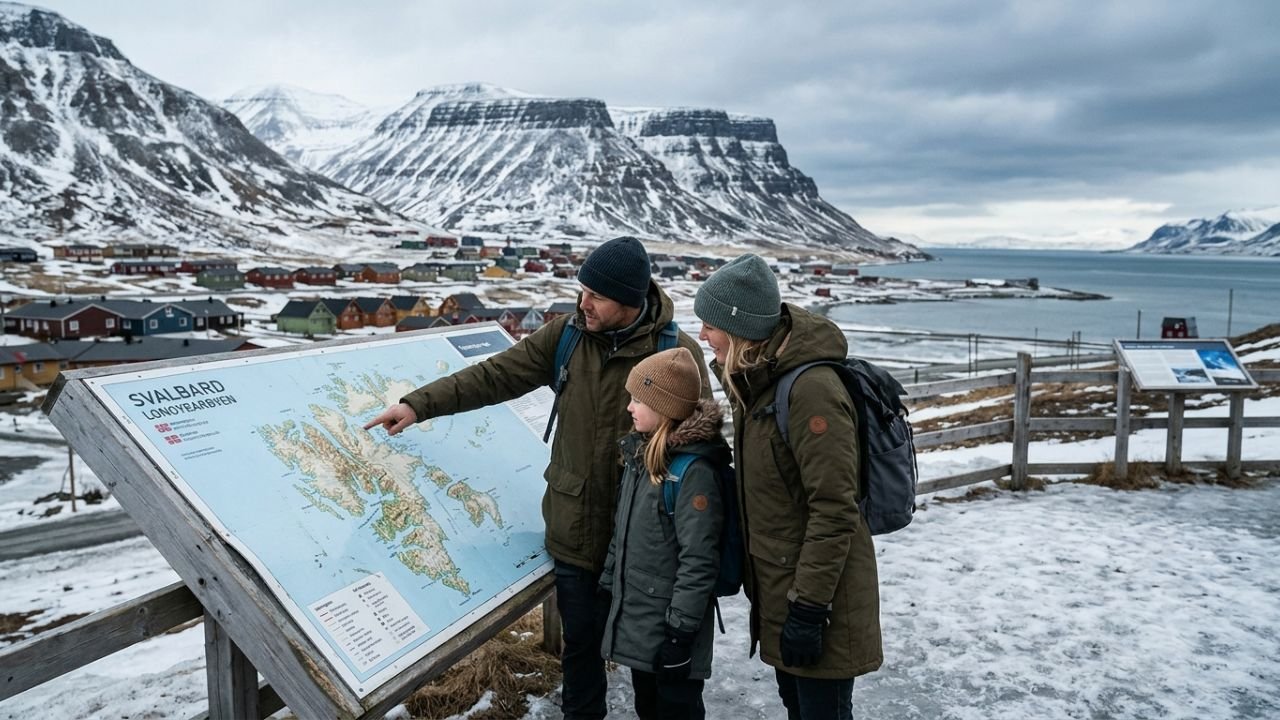
Svalbard is an Arctic archipelago at about 78 degrees north. It lies roughly halfway between mainland Norway and the North Pole. The name is often translated as “cold coasts.”
Spitsbergen is the largest island, and it holds Longyearbyen, the main town and tourist hub. Longyearbyen is small, with a population of around 2,000 to 2,500. Svalbard is part of Norway, but a special treaty gives it its own rules, including visa-free living and working for people of many nationalities.
How many days do you need in Svalbard?
Four to five nights suits most first-timers. That gives you time for a town walk, one or two big excursions, and a spare day if the weather changes.
Weather can cancel boat trips and snowmobile tours, so extra days are a smart buffer. A long weekend works only if you keep your plans simple.
Best time to visit Svalbard for first-timers
Svalbard has three practical seasons: the sunny winter, the polar summer, and the dark season with northern lights. The right one depends on what you want to see and how much cold you can handle.
| Season | Months | Best for | Main drawback |
| Sunny winter | March to mid-May | Snow, dog sledding, snowmobiles, ice caves | Still very cold |
| Polar summer | Late May to September | Boat trips, hiking, wildlife, midnight sun | Busiest and priciest period |
| Dark season | October to February | Northern lights, cozy town life | Little daylight, fewer activities |
March to May: snow, light, and classic Arctic adventure
This is the favorite window for many first-time visitors. The sun returns, the days grow long, and the landscape is still white. Visit Svalbard describes this period as running from early March to mid-May.
It is the best time for dog sledding, snowmobile trips, and ice cave visits. The midnight sun begins in Longyearbyen around April 19. In March you can also catch Solfestuka, the Sun Festival, which celebrates the sun’s return.
June to August: midnight sun, boats, wildlife, and hiking
Summer brings 24-hour daylight and the mildest weather of the year. Boats can reach fjords, glaciers, and the old mining settlements of Pyramiden and Barentsburg. Hikes, kayaking, and wildlife watching open up too.
This is also the peak travel season, so book flights, rooms, and tours early. Expect cool days, not warm ones.
September to October: autumn and northern lights transition
Daylight shrinks fast in autumn, and the first northern lights return. Crowds thin out, and the town feels calm. Some boat tours end in late September, and twilight takes over by late October.
This is a good shoulder option if you want a quieter trip and a taste of both light and dark.
November to February: polar night
The polar night runs from mid-November to late January, when the sun stays below the horizon. It is not pitch black all day, since there is a soft blue twilight around midday. The sun first clears the horizon again around mid-February.
This season suits aurora hunters, and it is popular at Christmas. Daylight activities are limited, and the cold can be sharp.
Best time to visit Svalbard for polar bears
Summer gives you the best odds of seeing polar bears, and mostly on boat trips or expedition cruises that go well beyond Longyearbyen. Ships that sail around the archipelago have the strongest chances.
Sightings are never guaranteed. A short day trip from town may show seals, walrus, reindeer, or seabirds instead, and that is still a great day. Polar bears are wild animals, so no honest operator can promise one.
Svalbard temperature: what to expect
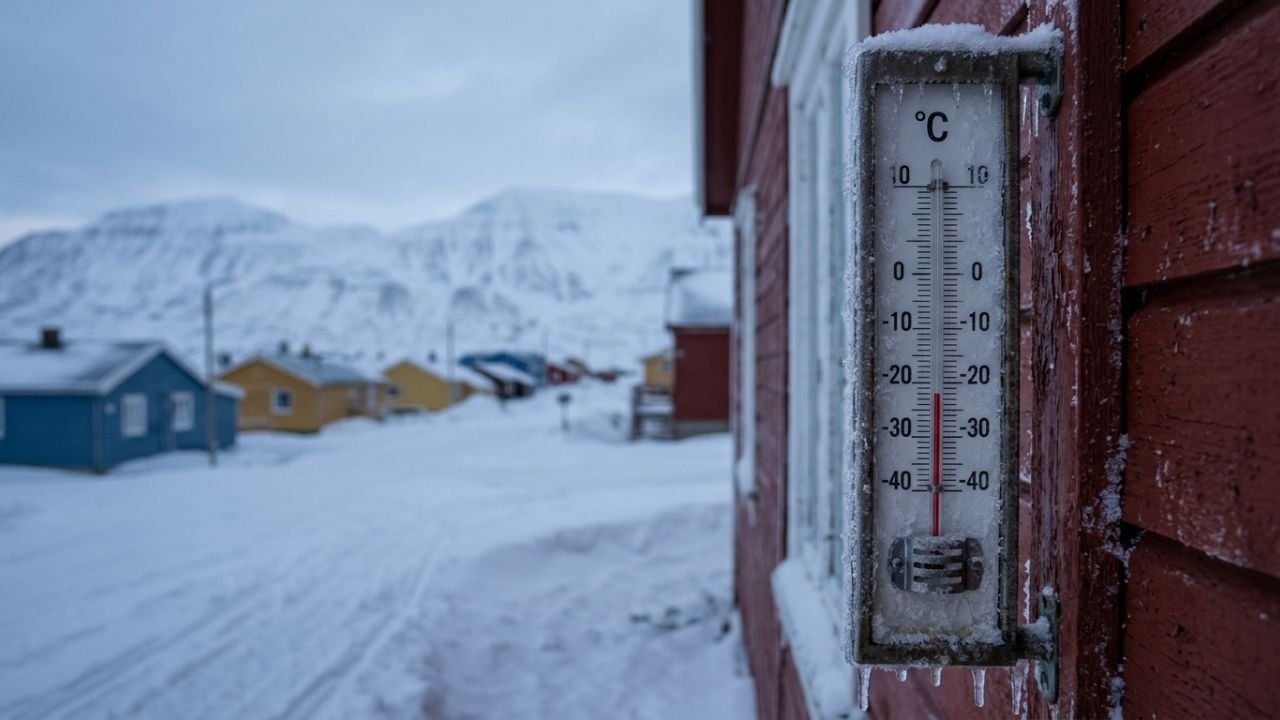
Longyearbyen has a cold polar climate. Winter averages sit well below freezing, and even July is cool. Wind can make it feel much colder, so plan for wind chill.
| Time of year | Typical conditions (approximate) |
| January to March | Around -10 to -16 °C (about 14 to 3 °F) on average, and March is often the coldest month |
| April to May | Roughly -9 to -2 °C daytime highs |
| June | Close to freezing to a few degrees above |
| July and August | Daytime highs of about 6 to 8 °C (43 to 46 °F) |
| September | Around 0 to 2 °C |
| October and November | Highs of about -4 to -8 °C |
These are averages from weather sites, not forecasts. Check the Norwegian Meteorological Institute (yr.no) before you pack.
How to get to Svalbard
The easiest route is by plane from mainland Norway. Only two airlines serve Longyearbyen Airport (LYR): SAS and Norwegian.
- Fly to Oslo or Tromsø from your home airport.
- Connect to Longyearbyen on SAS or Norwegian. Some SAS flights from Oslo stop in Tromsø, which adds about an hour.
- Clear passport control in Oslo or Tromsø before boarding, because the flight leaves the Schengen Area.
- Take the airport shuttle bus, which meets arriving flights and stops at most hotels.
Book early for spring and summer. Return fares from Oslo often land somewhere between about NOK 1,500 and NOK 3,300, but prices vary a lot by date.
Svalbard itself is visa-free, but you still need to meet Norway’s entry rules on the way through. Always carry a passport. Even EU travelers who use an ID card on the mainland should bring one. Summer expedition cruises from mainland Norway are another option if you prefer the sea.
Where to stay in Longyearbyen
Lodging is limited, so book early. Most visitors choose hotels, and a few guesthouses, hostel rooms, and self-catering apartments also exist.
- Basecamp Hotel: A popular, rustic hotel in the center. Listed rooms start at roughly NOK 3,000 and go up from there.
- Radisson Blu hotel: The largest hotel in town, often used by tour groups.
- Gjestehuset 102: A budget-friendly guesthouse a short distance from the center.
- Coal Miners’ Cabins: A mining-heritage stay that has reopened for guests.
Families should ask about room sizes and apartment options. The airport shuttle makes it easy to stay slightly outside the center.
What Svalbard costs: realistic first-trip budget
Svalbard is expensive because almost everything is imported and tours need guides, boats, and safety gear. Some travel writers estimate a daily budget of 400 to 500 euros per person for a decent hotel plus a boat trip.
Use these figures as planning signals, not fixed prices.
| Item | Rough cost |
| Return flight from Oslo | NOK 1,500 to 3,300 |
| Airport shuttle | Low cost, roughly NOK 100 one way |
| Basic guesthouse or hostel room | From about NOK 1,000 to 1,200 per night |
| Hotel room | From about NOK 3,000 per night and up |
| Half-day dog sledding | About NOK 1,800 to 3,000, depending on season |
| Snowmobile ice cave or aurora tour | About NOK 3,000 driver, about NOK 1,700 to 1,800 passenger |
| Boat trip to Pyramiden or Barentsburg | Roughly US220toUS250 in recent listings |
| Svalbard Museum | Around NOK 150 to 160 for adults |
Money-saving tips:
- Spend on one or two tours, and keep meals simple.
- Share snowmobiles as driver and passenger to cut costs.
- Book guesthouses and flights early.
- Visit in a shoulder month such as late April, May, or September.
- Buy groceries for breakfast or picnic lunches.
The best things to do in Svalbard on a first trip
Most activities need a guide, because leaving town without polar bear protection is not allowed. Book early, and ask operators about minimum ages. Some list dog sledding from about age 6 and snowmobile passengers from about age 8, but this varies.
Walk Longyearbyen with a local guide
A guided town walk is a smart first stop. You learn about mining history, polar bear safety, and daily life in the world’s northernmost town. It also helps you find shops, cafes, and the museum.
Visit Svalbard Museum
The museum covers nature, history, whaling, trapping, and mining. It is a good rainy-day or windy-day option, and it works well for children. Check current opening hours before you go.
Dog sledding
Dog sledding runs in winter on snow and in summer on wheeled carts. Winter feels more magical, but summer is still fun for families and animal lovers. Many tours include a visit with the huskies.
Snowmobiling
Snowmobile tours reach glaciers, valleys, and ice caves in spring and winter. They suit adults and older teens, since drivers have age limits. Operators usually supply thermal suits and helmets.
Boat trip to Pyramiden or Barentsburg
Pyramiden is an abandoned Soviet mining town, now a quiet open-air museum. Barentsburg is still a working Russian mining settlement with a few hundred residents. Day trips run by boat in the summer season, and in winter you go by snowmobile.
Some boats cannot dock in bad weather, so keep a flexible day.
Glacier and wildlife tours
Summer boat trips head to Nordenskiöldbreen and other glaciers. Look for reindeer, walrus, seals, and seabirds. Choose a smaller group if you want a more personal trip.
Northern lights
The best season runs from late October to February, when the sky is dark. Tours take you away from town lights by minibus or snowmobile. Clouds decide everything, so plan more than one evening.
A practical 4-night Svalbard itinerary
This plan suits a spring or winter trip. In summer, swap the dog sledding and snowmobile days for boat tours and hikes.
Day 1: Arrive, settle in, town walk
Check in, grab warm clothes, and join a guided Longyearbyen walk. Eat an early dinner and rest.
Day 2: Dog sledding and Svalbard Museum
Do a half-day dog sledding tour in the morning. Visit the Svalbard Museum in the afternoon, and enjoy a cafe stop.
Day 3: Big adventure day
Choose one big tour. Options include a snowmobile ice cave trip in spring or a glacier boat safari in summer.
Day 4: Pyramiden, Barentsburg, glacier, or buffer day
Take the Pyramiden or Barentsburg trip if the season allows. If not, join a glacier tour or keep this as a weather buffer. Add a northern lights tour in the dark months.
Day 5: Breakfast and depart
Have breakfast, pack, and check the airport shuttle time. Arrive early, since the airport has limited security lanes and queues can build.
Where to eat and drink in Longyearbyen
The food scene is small but good, with Arctic ingredients and cozy pubs. Many restaurants are in the center, and Coal Miners’ Bar & Grill has reopened. Popular names include Huset, Kroa, and Fruene, but confirm hours and bookings first.
To buy alcohol from the liquor store, you must show proof of travel, such as a boarding pass. Svalbard also limits how much alcohol you can buy. Many visitors save money by eating breakfast and lunch from the grocery store.
Svalbard safety rules that matter
Polar bears live on Svalbard, and safety rules are serious.
- Do not leave settlements without proper polar bear protection. The Governor of Svalbard recommends a rifle plus scare devices.
- If you are new, join a guided tour. Guides carry the gear and know the terrain.
- If you see a polar bear near town, move away calmly, get to safety, and report it to the Governor.
- Never approach, lure, or follow a bear.
- Independent trips outside the main settlement area may require notifying the Governor and carrying search and rescue insurance. Check sysselmesteren.no.
- Respect cultural heritage sites, since old trapper huts and mining remains are protected.
- Buy travel insurance that covers Arctic activities.
What to pack for Svalbard
Layers matter more than one thick jacket.
- Base layers in wool or synthetic fabric.
- A warm mid layer such as fleece.
- A windproof, waterproof outer jacket and pants.
- Insulated boots with good grip.
- Wool socks, gloves, a warm hat, and a neck gaiter.
- Sunglasses and sunscreen for bright snow.
- A sleep mask for the midnight sun.
- A power bank, since cold drains batteries fast.
- Passport and travel insurance papers.
In winter, many operators lend thermal suits for snowmobile and sledding tours. Ask before you buy extra gear.
Common Svalbard planning mistakes
- Booking too late, especially for spring and summer.
- Planning only two days and leaving no weather buffer.
- Expecting a guaranteed polar bear sighting.
- Forgetting the passport, or relying on an ID card.
- Underestimating the cost of tours and meals.
- Packing cotton clothes, which stay damp and cold.
- Trying to explore alone beyond town limits.
- Skipping insurance.
Is Svalbard worth visiting?
Yes, for most travelers who enjoy nature and unusual places. You get glaciers, wildlife, Arctic history, and a real sense of the far north, all with a short flight from Norway. It is not a budget trip, and it is not for people who want beaches or big-city shopping.
It can work for families with older children, especially in spring, when dog sledding and short tours are easier to plan. Younger kids may enjoy the museum, huskies, and town, but many tours have age limits.
Conclusion
A good Svalbard travel guide comes down to a few choices. Pick your season, plan four to five nights, and book flights and tours early. Add a weather buffer, follow the polar bear rules, and pack in layers.
Spring is great for snow adventures, and summer is best for boats and wildlife. Winter belongs to the northern lights. Whichever you choose, you will be ready to enjoy your first trip to Svalbard with confidence.
Frequently Asked Questions
Do I need a visa for Svalbard?
No visa is needed for Svalbard itself. But you pass through mainland Norway, so you must meet its entry rules. Check your nationality’s requirements, and ask about a multiple-entry visa if you need one.
Do I need a passport to go to Svalbard?
Yes, bring a passport. Svalbard is outside the Schengen Area, and passport control happens in Oslo or Tromsø. The Governor of Svalbard warns against relying on an ID card.
Is Svalbard safe for tourists?
Yes, when you follow the rules and join guided tours outside town. The main risk is polar bears, so never leave settlements without proper protection and training.
Can you see polar bears in Svalbard?
Sometimes, but it is not guaranteed. Summer boat trips and expedition cruises give the best chances, and most sightings are from the water.
What is the cheapest month to visit Svalbard?
There is no truly cheap month. Winter months like January and February often have lower hotel rates, while April and summer are pricier. Booking early matters more than the month.
Can you drive around Svalbard?
Not far. Roads exist only around Longyearbyen and do not connect to other settlements. To go farther, you need a guided boat, snowmobile, or dog sled tour.
How many days do you need in Svalbard?
Four to five nights is ideal for a first trip. That allows time for tours and a spare day for weather changes.
Is Svalbard good for families?
It can be, with older children and good planning. Some activities have minimum ages, so check each operator before you book.






- Be Respectful
- Stay Relevant
- Stay Positive
- True Feedback
- Encourage Discussion
- Avoid Spamming
- No Fake News
- Don't Copy-Paste
- No Personal Attacks
- Be Respectful
- Stay Relevant
- Stay Positive
- True Feedback
- Encourage Discussion
- Avoid Spamming
- No Fake News
- Don't Copy-Paste
- No Personal Attacks
