Fiji Ton a Budget: Tips for an Affordable Trip
Published: 11 Oct 2026
Fiji has a reputation for luxury resorts and high prices. But Fiji on a budget is very possible, and you do not have to skip the beaches, the snorkeling, or the island life to make it work. You just need to know where the money goes and where to cut back.
This guide covers what a day in Fiji really costs, where to stay, what to eat, and how to get around cheaply. It also lists free and low-cost things to do, plus extra tips for families. Prices below are estimates from recent travel cost guides and local transport sources. They change often, so always confirm before you book.
Table of Contents
The Bottom Line: Daily Budget Breakdown
Fiji is not the cheapest place in the Pacific, but it is much cheaper than most people expect once you leave the big resorts. Your biggest cost will be the flight. Your second biggest will be where you sleep.
Budget travel guides give a wide range, so treat these numbers as planning anchors, not fixed prices. The Fijian dollar (FJD) is worth roughly 0.44 US dollars at the time of writing.
| Travel style | Typical daily cost per person | What it usually covers |
| Backpacker | About USD 50 to 90 (FJD 115 to 200) | Dorm bed or basic room, local food, buses |
| Budget traveler | About FJD 150 to 350 | Guesthouse or budget hotel, local cafes, a few paid activities |
| Mid-range | About FJD 350 to 800 | Comfortable hotel, sit-down meals, tours |
These figures do not include flights. International fares are often the largest single expense. Guides list roughly USD 800 to 1,500 from the US west coast, and lower fares from Australia and New Zealand.
What drives your Fiji travel costs
Four things move your total the most:
- Flights: Book early and stay flexible on dates.
- Where you sleep: Resort prices are far above guesthouse prices.
- Meals: Eating local can cut food costs sharply.
- Island hopping: Boat transfers add up fast.
If you control these four, the rest is easy.
When to go for lower prices
Fiji has a dry season from about May to October and a wetter, hotter season from about November to April. Peak prices usually hit around school holidays, Christmas, and New Year.
Several cost guides point to February, March, May, August, and November as better months for lower prices. Rain is more likely in the wet season, but showers are often short. Cyclone risk is real from November to April, so buy travel insurance and check forecasts before you go.
Affordable Accommodation
Where you stay shapes your whole budget. The good news is that Fiji has plenty of options beyond five-star resorts.
Best budget places to stay
- Hostels and backpacker lodges: Dorm beds in Nadi, Suva, and the Yasawa Islands are the cheapest choice. Many include basic meals.
- Guesthouses and small hotels: A private room with a fan or air conditioning is common in Nadi and along the Coral Coast.
- Island budget resorts: Some islands in the Mamanuca and Yasawa groups offer dorms and simple bures (traditional-style huts) at lower prices than luxury resorts.
- Village homestays: Staying with a local family can be low cost and very rewarding. Ask your host about customs before you arrive.
- Self-catering apartments: These suit families and groups, since you can cook some of your own meals.
Where to base yourself
Nadi is the easiest starting point. It has an international airport, cheap buses, and many budget stays. Denarau Island is where most big resorts sit, so it is usually not the cheapest base, but it is the departure point for island ferries.
The Coral Coast and Pacific Harbour offer a mix of beach and local life. Suva, the capital, has lower accommodation prices, more local food, and fewer tourists.
Tips for booking cheaper stays
- Compare dorm and private room prices. For two or more people, a private room can cost about the same per person.
- Look for packages that bundle a bed and meals on remote islands. There is often nowhere else to eat.
- Ask about resort fees, boat transfers, and water taxis before you pay.
- Book your first and last nights near Nadi airport to keep transfers short.
Eating Well for Less
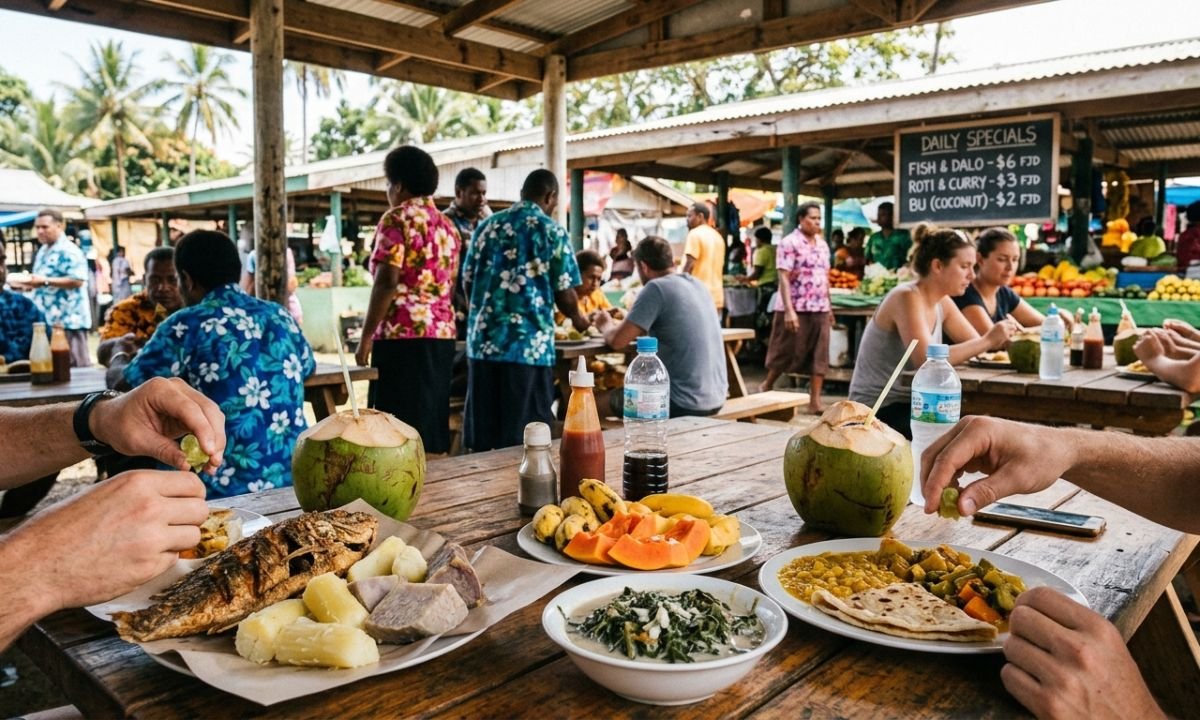
Food in Fiji can be your biggest saving. Resort restaurants and imported items are expensive. Local cafes, markets, and takeaway shops cost much less.
Must-Try Budget Eats
These local favorites are filling, tasty, and easy on your wallet:
- Curry and roti: Fiji has a large Indo-Fijian community. A curry with roti or rice is one of the best cheap meals in the country.
- Fresh fish and kokoda: Kokoda is raw fish marinated in coconut milk and lime. Check that the place looks busy and fresh.
- Market fruit and vegetables: Papaya, pineapple, bananas, and coconuts are cheap in town markets such as Nadi and Suva.
- Cassava, taro, and dalo dishes: These starchy local staples are hearty and low cost.
- Lovo: This is food cooked in an underground oven. It is often served at village visits and special events.
- Bakery snacks and fried fish with chips: Good for quick, cheap lunches.
Money-Saving Food Tips
- Eat where locals eat. Look for small cafes with short menus and busy tables.
- Shop at the market. Buy fruit, bread, and snacks for breakfast and beach days.
- Cook if you can. A kitchen in your accommodation cuts costs, especially for families.
- Skip resort drinks. Buy bottled water or refill from safe sources. Ask your host which water is safe to drink.
- Choose meal packages wisely. On remote islands, a meal plan is often cheaper than ordering each meal.
- Watch drink prices. Local beer from a shop costs far less than the same bottle at a resort bar.
Free and Cheap Things to Do
You do not need to book pricey tours to enjoy a Fiji trip on a budget. The best parts of Fiji are the beaches, the water, and the people.
Free things to do in Fiji
- Swim and relax on public beaches. Many beaches along the Coral Coast and on the islands are free to enjoy.
- Snorkel from the shore. On many islands, you can snorkel right off the beach. Bring your own mask and fins to save on rental fees.
- Walk through town markets. The markets in Nadi and Suva are lively, colorful, and free to explore.
- Watch the sunset. Sunset on the west coast of Viti Levu is a free show.
- Join local church services or events. Singing is a big part of Fijian life. Visit with respect and dress modestly.
Cheap things to do
- Visit a village. Many villages welcome visitors with a guide or a small gift. You may be invited to a kava ceremony. Follow your host’s lead and dress modestly (cover shoulders and knees).
- Hike in a forest park. Places like Colo-i-Suva Forest Park near Suva offer walking trails and swimming holes for a small entry fee.
- See a temple. The Sri Siva Subramaniya Temple in Nadi is a colorful Hindu temple that visitors can enter for a small fee.
- Try a day trip to the Mamanuca Islands. Look for lower-cost day passes or shared boat trips.
- Ride a local bus to a new town. Lautoka, Sigatoka, and the Coral Coast are all easy day trips.
Activities worth paying for
Some activities are worth a splurge if you plan ahead. A snorkel or dive trip, a visit to a hot spring and mud pool, or a boat day on the Mamanuca Islands can be the highlight of a trip. Pick one or two, and book directly with local operators when you can. Compare a few prices first.
Getting Around Cheaply
Getting around is one of the easiest places to save in Fiji. Local transport is cheap, but ferries and domestic flights are not.
| Option | Approximate cost | Best for |
| Local bus, Nadi to Denarau | FJD 1 to 2 | Short hops around Nadi |
| Local bus, Nadi to Lautoka | FJD 3 to 4 | Day trips |
| Express bus, Nadi to Pacific Harbour | FJD 18 to 20 | Coral Coast travel |
| Bula Bus day pass on Denarau | About FJD 11 | Moving around resort areas |
| Ferry to Mamanuca Islands | From about FJD 105 one way | Short island stays |
| Ferry to Yasawa Islands | About FJD 220 one way | Longer island stays |
| Bula Pass for Yasawa Flyer | About FJD 400 (5 days) to FJD 725 (15 days) | Multi-island trips |
Prices are estimates from local transport guides and may have changed. Check with the operator before you travel.
Tips for using local buses
- Buses are very cheap and run on most main roads. Tourists can usually buy a temporary transport card on the bus.
- Local buses do not stop at Nadi Airport. Use a taxi or an express coach for your first trip, and then take the local bus from the stop across the road.
- Avoid carrying many suitcases on a local bus. It is hard for you and other riders.
- Taxis are common and often use meters. Agree on a price first for long rides.
Island transfers
Boats are the big cost in Fiji. A Bula Pass can save money if you plan to visit several Yasawa Islands. It only makes sense if you will use enough hops.
Book your resort before you board the boat, since the pass requires it. Ask if there is an extra water taxi fee at your island. If you only want one island, a single return ticket or a short Mamanuca trip may cost less.
Pro Tips for Saving Even More
These small habits add up over a week or two.
- Travel in the off-peak or shoulder season. Flights and rooms cost less outside school holidays.
- Set a flight alert early. Watch prices from your home airport for several weeks.
- Limit island hopping. Pick one or two islands instead of four.
- Bring your own gear. Pack a snorkel mask, reef-safe sunscreen, a reusable water bottle, and a dry bag.
- Carry some cash. Small shops, markets, and village visits often prefer cash. ATMs are common in towns but rare on remote islands.
- Get a local SIM or eSIM. It is often cheaper than roaming. Signal is patchy on remote islands.
- Buy travel insurance. A cancelled boat or a medical issue can wipe out your savings.
- Check entry rules early. Many travelers can enter visa-free for a set time, but rules depend on your passport. Check the official Fiji government immigration site before you book.
Common mistakes to avoid
- Booking a resort without checking meal costs.
- Paying for tours you can do on your own.
- Buying a Bula Pass and not using it enough.
- Skipping insurance in the wet season.
Saving on a family trip to Fiji
Families can travel in Fiji on a budget too. Many resorts offer kids-stay-free or kids-eat-free deals, so ask when you book. A self-catering room with a small kitchen can save a lot on meals. Look for ferry child fares, which are often much lower than adult fares. Keep activities simple: beach days, shore snorkeling, and village visits are fun for children and cost little.
Is Fiji Worth It on a Budget?
Yes, Fiji is worth it if you plan well. It will not be as cheap as Southeast Asia. But you can still enjoy clear water, warm weather, and friendly people for far less than a resort package costs.
Fiji suits you if you want beaches, snorkeling, and a laid-back pace. It may not suit you if you need high-end service every day and hate planning. For most travelers, a mix of one or two nights in a nicer spot and the rest in simple stays gives the best balance.
Conclusion
Fiji on a budget comes down to a few smart choices. Fly in the off-peak months, stay in guesthouses or budget island lodges, and eat local food. Use buses on the main island, and be careful with boat transfers.
Plan your top one or two paid activities, and fill the rest of your days with free beaches, markets, and village visits. With this approach, you can enjoy a memorable trip without the resort price tag.
Frequently Asked Questions
How much does a trip to Fiji cost on a budget?
Most budget guides suggest about USD 50 to 90 per day for backpackers and about FJD 150 to 350 per day for budget travelers. Flights are extra. A one-week trip can range from about USD 1,500 to 2,000 per person including flights, depending on where you fly from.
What is the cheapest month to visit Fiji?
Off-peak months such as February, March, May, August, and November often have lower prices. Avoid Christmas, New Year, and school holiday periods if you want to save.
Is Fiji expensive for tourists?
Resort areas are expensive. Local areas are much cheaper. If you eat local food, use buses, and choose guesthouses, daily costs drop a lot.
Can I visit Fiji without staying at a resort?
Yes. Guesthouses, hostels, homestays, and budget island lodges are common. Staying in Nadi, Suva, or on the Coral Coast is a good way to save.
Is a Bula Pass worth it?
It can be, if you plan to visit several Yasawa Islands in one trip. If you only visit one or two islands, single tickets can cost less. Add up your planned hops before you buy.
Is it safe to drink the tap water in Fiji?
Tap water safety varies by area. Ask your accommodation, and use bottled or filtered water if you are unsure. A reusable bottle with a filter can save money and plastic.
Do I need cash in Fiji?
Cards work in many hotels and larger shops. Cash is better for markets, buses, small cafes, and villages. Bring some Fijian dollars from an ATM in town before you head to remote islands.
Is Fiji good for families on a budget?
Yes. Look for kids-stay-free offers, rooms with kitchens, and simple beach days. Family-friendly guesthouses in Nadi and on the Coral Coast are good low-cost bases.




- Be Respectful
- Stay Relevant
- Stay Positive
- True Feedback
- Encourage Discussion
- Avoid Spamming
- No Fake News
- Don't Copy-Paste
- No Personal Attacks
- Be Respectful
- Stay Relevant
- Stay Positive
- True Feedback
- Encourage Discussion
- Avoid Spamming
- No Fake News
- Don't Copy-Paste
- No Personal Attacks
