Cape Town Trip Cost: Daily Budget and Expenses
Published: 11 Oct 2026
Planning a trip to the Mother City and wondering what it will really cost? The Cape Town trip cost depends on how you travel, where you sleep, and how many days you stay. The good news is that the city works for almost every budget.
In this guide, you will see a daily cost summary for budget, mid-range, and luxury travel. You will also get a full breakdown of hotels, food, transport, and activities. Then we cover total costs by trip length, ways to save, hidden fees, and whether Cape Town is expensive.
All figures below are per person, per day, in US dollars, and they do not include flights. Prices change with the exchange rate and the season, so use them as a planning base and check current rates before you book.
Table of Contents
Daily Cost Summary
Here is the quick answer. A budget traveler can get by on about $28 a day, a mid-range traveler on about $72, and a luxury traveler on about $226.
| Expense | Budget | Mid-Range | Luxury |
| Accommodation (per night) | $11 | $28 | $100 |
| Food and drink (per day) | $9 | $24 | $63 |
| Transport (per day) | $3 | $8 | $20 |
| Activities and fees (per day) | $5 | $12 | $43 |
| Total per day | $28 | $72 | $226 |
These numbers are a starting point. Other travel guides publish higher daily budgets for Cape Town, especially for private rooms and sit-down meals. If you want a comfortable buffer, add 15 to 25 percent to the totals above.
Accommodation Costs
Where you sleep is usually the biggest line in your Cape Town daily budget. Neighborhood matters as much as star rating. Areas like Sea Point, the City Bowl, and Gardens are popular and well connected.
If you travel as a couple or a family, check whether the price is per bed or per room. Sharing one room can lower the cost for each person.
Budget ($11 per night)
At this level, think dorm beds in hostels and very simple guesthouses. Cape Town has a strong backpacker scene, with hostels in areas such as Sea Point and near Long Street.
Expect shared bathrooms, basic breakfast options, and a social atmosphere. Families may find private rooms in hostels or small guesthouses a better fit, though these cost more than a dorm bed.
Mid-Range ($28 per night)
Mid-range stays usually mean private rooms in guesthouses, small hotels, and simple self-catering apartments. You get your own bathroom, more privacy, and often a kitchen or breakfast.
Self-catering is a smart choice for families. A kitchen lets you make breakfast and packed lunches, which cuts food costs.
Luxury ($100 per night)
The luxury level covers upscale hotels, boutique properties, and well-located apartments with sea or mountain views. Rooms near the V&A Waterfront and Camps Bay tend to cost more.
Luxury prices can rise a lot in peak season, so book early if you want a specific hotel.
Food and Drink Costs

Food is where Cape Town offers great value. You can eat very well without spending much, and wine and coffee are good too.
Tap water in Cape Town is generally safe to drink, so bring a reusable bottle. This saves money on bottled water every day.
Budget ($9 per day)
Budget eating means street food, bakeries, supermarket meals, and cheap local cafes. Many travelers buy groceries for breakfast and lunch, then pick one simple dinner out.
A few good budget habits:
- Shop at local supermarkets for fruit, bread, and snacks.
- Look for lunch specials and takeaway counters.
- Share large portions when you can.
Mid-Range ($24 per day)
At this level, you can enjoy a sit-down dinner most evenings. Think casual restaurants, a coffee in the morning, and a lunch out.
It is also enough to try Cape Malay dishes, fresh seafood, and local braai (barbecue) menus without stress.
Luxury ($63 per day)
Luxury dining includes fine restaurants, wine pairings, cocktails, and waterfront views. A winelands lunch can fit here, though a full wine day with tastings and transport can cost more.
Book popular restaurants ahead, especially on weekends and in summer.
Transport Costs
Transport in Cape Town is easy to plan once you pick a main method. Most visitors mix rideshare apps, buses, and the occasional taxi or rental car.
| Option | Best For | Notes |
| MyCiTi bus | Budget travelers, airport and city routes | Uses a rechargeable card, good along main routes |
| Uber and similar apps | Evenings, short trips | Widely used, prices can jump at busy times |
| Rental car | Cape Peninsula, winelands, groups | Adds fuel, parking, and insurance costs |
| Guided tours | Short trips, no driving | Higher price, but simple |
Budget ($3 per day)
Stay close to bus routes and walk when it is safe. Neighborhoods such as the City Bowl, Gardens, and Sea Point let you reach many sights on foot or by bus.
Mid-Range ($8 per day)
Mix buses with a few rides each week. This works well for travelers who want flexibility without renting a car.
Luxury ($20 per day)
At this level, you can rely on rideshares and private transfers most days. Taking a taxi at night is a sensible choice for safety and comfort, and it is easy to build into this budget.
If you plan to see Cape Point, Boulders Beach, and the winelands, a rental car or a private driver may be better value for a group than paying per ride.
Activities and Entrance Fees
Cape Town is full of free and low-cost things to do. Beaches, viewpoints, and many hikes cost nothing. Paid highlights add up quickly, though.
Budget ($5 per day)
Focus on free sights: walking around the V&A Waterfront, Bo-Kaap, Signal Hill sunsets, and public beaches. Add one paid attraction every few days.
Hiking Table Mountain on foot instead of riding the cable car is a classic budget move. Check weather first and never hike alone in poor conditions.
Mid-Range ($12 per day)
This covers one paid activity most days. Good picks include the Kirstenbosch gardens, a Cape Point and Boulders Beach day trip, or a visit to the aquarium.
Some parks charge higher entry fees for foreign visitors than for locals, so check the official site for your date.
Luxury ($43 per day)
Luxury budgets can include guided tours, private drivers, Robben Island, the cable car with fast track, and wine tastings. Robben Island visits are often popular, so book ahead through official channels.
For the cable car, buy tickets only from the official site or ticket office. Tickets are valid for 7 days, which helps if bad weather closes the cableway on your first try.
Cape Town Trip Cost by Duration
Here is the total Cape Town trip cost per person by number of days. These totals use the daily figures above and do not include flights, travel insurance, or shopping.
| Trip Length | Budget | Mid-Range | Luxury |
| 3 days | $84 | $216 | $678 |
| 5 days | $140 | $360 | $1,130 |
| 7 days | $196 | $504 | $1,582 |
| 10 days | $280 | $720 | $2,260 |
| 14 days | $392 | $1,008 | $3,164 |
For a family, multiply by the number of travelers, then adjust. Children often get lower ticket prices at major attractions, and shared rooms reduce the cost per person. Always confirm child ages and rates on the official ticket pages.
Money-Saving Tips
You can lower your Cape Town travel costs without missing the best parts of the trip. These steps make the biggest difference.
- Travel in the off-season. Winter, roughly June to August, is often cheaper for hotels. Summer and the December holidays are the busiest and priciest.
- Book early. Popular guesthouses, Robben Island tickets, and Table Mountain slots fill up in high season.
- Choose self-catering. A kitchen cuts food costs, which really helps larger families.
- Use buses for long, easy routes. Save rideshares for evenings and tricky routes.
- Split costs in a group. A rental car for a Cape Peninsula day is often cheaper per person with four or more people.
- Fill your own water bottle. Tap water is generally safe to drink.
- Mix free and paid days. Pair a paid attraction day with a beach or hiking day.
- Pay in local currency when possible. Choose rand when a card machine offers a choice, and avoid poor exchange rates.
Hidden Costs to Watch For
Surprise fees are what break most budgets. Plan for these before you land.
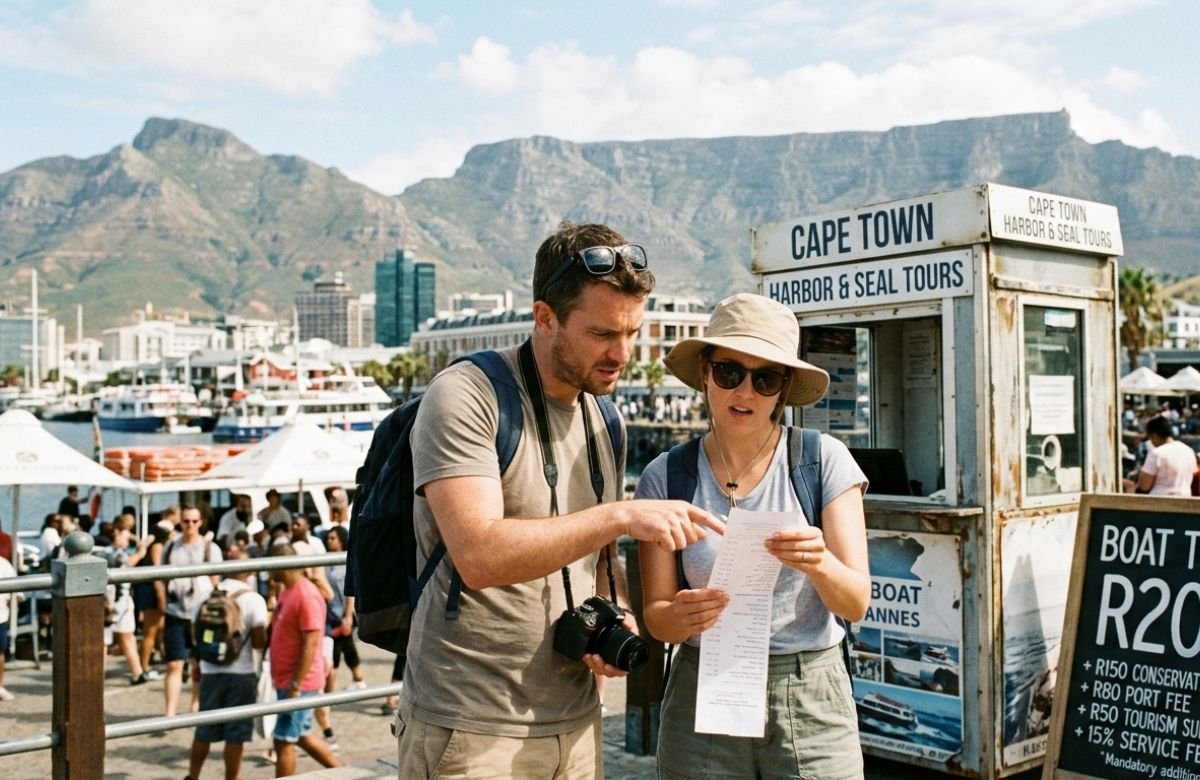
- Peak-time rideshare pricing. Fares can rise during busy hours and events.
- Foreign visitor park fees. Places like Cape Point and Boulders Beach have separate rates for international visitors.
- Wine tasting fees and transport. The tasting is only part of the cost. Lunch and the trip to the winelands add up.
- Tipping. Restaurant tips of about 10 to 15 percent are common. Small tips for parking attendants are also usual.
- Airport transfers. A taxi or rideshare from the airport can cost more than people expect, so check your options in advance.
- Travel insurance. It is not optional for most trips, and it can cover weather cancellations and medical care.
- Bad weather. The cableway may close in wind. Keep a flexible day in your plan.
- SIM or eSIM data. Mobile data helps with maps and rideshares, so include it in your budget.
- Visa and entry requirements. Check the rules for your passport well before you travel.
Is Cape Town Expensive?
For most Western travelers, Cape Town is not expensive. It is often cheaper than European and North American cities for food, hotels, and activities. The rand’s exchange rate is a big reason.
It can still feel costly if you rely on rideshares, private tours, and luxury hotels. Peak summer prices also push costs up. Meanwhile, free beaches, hikes, and views keep a budget trip very possible.
The best way to control your Cape Town trip cost is to decide your travel style first. Then match your hotel, meals, and tours to that level.
Conclusion
Cape Town is one of the better-value big-city destinations in the world. Using the daily figures in this guide, a budget trip may start near $28 a day, mid-range near $72, and luxury near $226, before flights. Add a buffer for hidden costs and changes in the exchange rate.
Start with your travel style, choose a neighborhood with good transport, and book popular attractions early. With a clear daily budget, your Cape Town trip cost becomes easy to plan and easier to enjoy.
Frequently Asked Questions
How much does a trip to Cape Town cost per day?
Based on the figures in this guide, expect about $28 a day for budget travel, $72 for mid-range, and $226 for luxury, per person and without flights. Many other guides list higher numbers, so add a buffer.
How much money do I need for 7 days in Cape Town?
Using the same estimates, a week costs about $196 on a budget, $504 mid-range, and $1,582 for luxury travel, per person. Flights and insurance are extra.
What is the cheapest time to visit Cape Town?
The winter months, roughly June to August, tend to have lower accommodation prices. Summer and the December holiday period are the busiest and most expensive.
Is Uber safe and affordable in Cape Town?
Rideshare apps are widely used and are a common choice for evenings. Prices can rise at busy times, so compare with buses and check fares before you confirm a ride.
Is tap water safe to drink in Cape Town?
Tap water is generally considered safe to drink. Carry a refillable bottle to save money.
Should I tip in Cape Town?
Yes. A tip of about 10 to 15 percent is common in restaurants if service is not already added. Small tips for parking helpers and delivery drivers are also usual.
Is Cape Town good for families on a budget?
Yes. Free beaches, gardens, and viewpoints are great for kids. Self-catering apartments, shared rooms, and child ticket rates help keep costs down.






- Be Respectful
- Stay Relevant
- Stay Positive
- True Feedback
- Encourage Discussion
- Avoid Spamming
- No Fake News
- Don't Copy-Paste
- No Personal Attacks
- Be Respectful
- Stay Relevant
- Stay Positive
- True Feedback
- Encourage Discussion
- Avoid Spamming
- No Fake News
- Don't Copy-Paste
- No Personal Attacks
