Tokyo Travel Costs: How to Explore Tokyo on a Budget
Published: 10 Oct 2026
Tokyo has a reputation as one of the most expensive cities in the world. The good news is that the reality is kinder. Visiting Tokyo on a budget is very possible, because the city offers cheap and tasty food, fast public transit, and plenty of free sights.
The trick is knowing where your money really goes. Hotels take the biggest bite. Food and transport are much easier to control than most first-time visitors expect.
In this guide, you will find realistic daily costs, cheap places to stay, budget eats, free and low-cost things to do, and smart ways to get around. You will also learn about new 2026 tax changes that can affect your trip budget.
Table of Contents
Tokyo on a Budget: The Bottom Line and Daily Budget Breakdown
Quick answer: Most budget travelers should plan on about ¥10,000 to ¥15,000 per person per day in Tokyo, not counting flights. That is roughly US65toUS95, depending on the exchange rate.
Sources vary a little. Lonely Planet says a budget day can start from ¥10,000 if you stay and eat at low-cost places. Other 2026 cost guides put a budget day near ¥12,000 (about US75).Somedollar-basedguideslistUS90 to US$130 for budget solo travel, usually because they include a slightly nicer room.
Here is how the main travel styles compare. Costs exclude flights.
| Travel style | Typical daily cost per person | Approx. US$ |
| Budget | ¥10,000 to ¥12,000 | $65 to $80 |
| Mid-range | About ¥22,000 | About $140 |
| Luxury | ¥40,000 and up | $250 and up |
A Sample Budget Day
The numbers below are planning estimates, not fixed prices. They show how a low-cost day can add up.
| Expense | Estimated cost |
| Hostel or guesthouse bed | ¥5,000 to ¥8,000 |
| Food (convenience store breakfast, set lunch, simple dinner) | ¥2,500 to ¥4,000 |
| Local transit | ¥500 to ¥1,000 |
| Sights and activities (mostly free) | ¥0 to ¥1,500 |
| Daily total | ¥8,000 to ¥14,500 |
Accommodation is usually the biggest line item. One 2026 cost guide says it makes up 40 to 50 percent of a mid-range daily budget. That is why the next section matters most.
Traveling with kids? Many costs drop for children. Tokyo Subway Tickets are half price for kids, and young children often ride trains free with an adult. Hotel rates and room rules vary, so always check the child policy before you book.
Affordable Accommodation in Tokyo
Where you sleep will shape your whole budget. Tokyo has more cheap options than people expect, but rooms are small. Pack light.
| Option | Best for | Money tip |
| Hostels and guesthouses | Solo travelers and couples | Budget guesthouses run about ¥5,000 to ¥8,000, with Tokyo at the higher end |
| Capsule hotels | One or two nights, solo travelers | Check if the hotel is mixed or gender-specific |
| Business hotels | Couples and small families | Compare per-room price, not per-person price |
| Apartments and private rentals | Families and longer stays | Look for a kitchen to cut food costs |
Where to Stay for Less
Rooms near the biggest hubs can cost more. Areas such as Ueno and Asakusa often have lower prices, and both have easy train links to the rest of the city. Pick a spot within a short walk of a subway or Yamanote Line station. A cheap room far from a station can cost you more in time and fares.
When to Book
Timing changes prices a lot. Cherry blossom season (late March to early April), autumn leaves (November), Golden Week (late April to early May), and New Year are the priciest times. One 2026 guide lists mid-January to February as the cheapest window overall. Book early for peak dates.
Watch for the Accommodation Tax
Tokyo charges a small lodging tax. Right now, stays under ¥10,000 per person per night are exempt. Stays from ¥10,000 up to ¥15,000 pay ¥100, and stays at ¥15,000 or more pay ¥200.
The city plans a new system starting April 1, 2027. The exemption would rise to under ¥13,000, and higher-priced stays would pay a flat 3 percent. Private rentals would also be included. Check whether your booking shows the tax separately.
Eating Well for Less
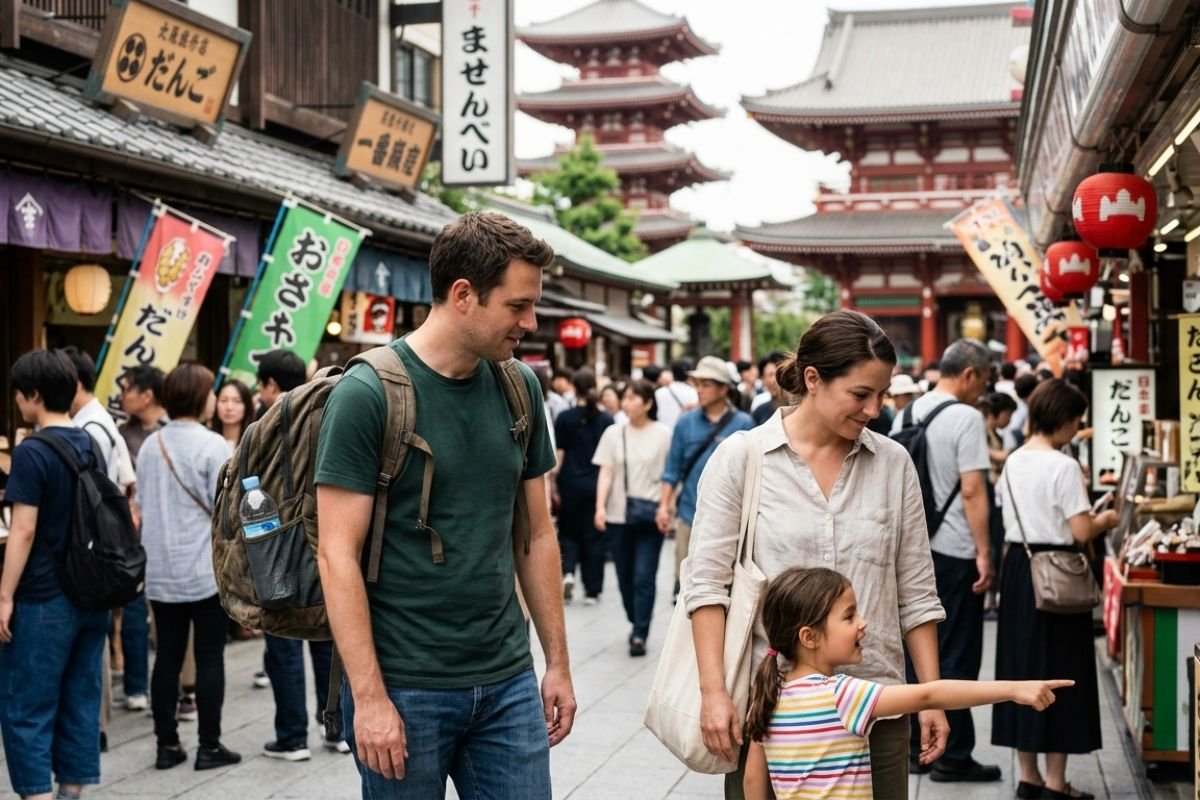
Food is where Tokyo on a budget really shines. You can eat very well without a big bill. Convenience stores, chain restaurants, and small local shops all offer filling meals at fair prices.
Must-Try Budget Eats
Many of these meals usually fall in the ¥500 to ¥1,500 range. Prices vary by shop and area.
- Ramen: A hot bowl at a small shop is a classic cheap meal.
- Gyudon (beef bowls): Chains like Sukiya, Yoshinoya, and Matsuya are fast, cheap, and open late.
- Standing soba and udon: Noodle counters near train stations serve quick, low-cost meals.
- Teishoku (set meals): A main dish with rice, soup, and sides, often best at lunch.
- Conveyor-belt sushi: Pick plates one by one and control what you spend.
- Konbini food: Onigiri (rice balls), egg sandwiches, and hot snacks are tasty and cheap.
- Curry rice and katsu: Hearty plates that keep kids and adults full for hours.
- Street snacks: Takoyaki, taiyaki, and market treats around areas like Ameyoko in Ueno.
Money-Saving Food Tips
- Eat your big meal at lunch. Lunch sets are often cheaper than the same food at dinner.
- Use ticket machines. Many small shops let you pick and pay at a machine, so there is no guessing on price.
- Do not tip. Tipping is not expected in Japan.
- Drink the free water. Most restaurants bring water or tea at no charge.
- Choose takeout when it helps. Takeaway food usually carries a lower consumption tax (8 percent) than dining in (10 percent).
- Shop department store food halls late. Many food halls (depachika) mark down prepared food in the evening.
- Plan one splurge. Save your treat for one special meal, and keep the rest simple.
Free and Cheap Things to Do in Tokyo
You do not need to pay a lot to enjoy the city. Some of the best experiences cost nothing. Here are free and cheap things to do in Tokyo.
| Attraction | Area | Cost |
| Tokyo Metropolitan Government Building observatory (45th floor) | Shinjuku | Free |
| Meiji Shrine and its forest grounds | Harajuku | Free (some inner areas may charge) |
| Senso-ji Temple and Nakamise shopping street | Asakusa | Free |
| Imperial Palace East Gardens | Chiyoda | Free |
| Ueno Park | Ueno | Free (museums charge separately) |
| Yoyogi Park | Shibuya | Free |
| Shibuya Crossing | Shibuya | Free |
| Advertising Museum Tokyo | Shiodome | Free |
| Volunteer-led walking tours (Asakusa, Ueno, Meiji Shrine area) | Various | Free (check availability) |
The Tokyo Metropolitan Government Building has one of the best free views in the city. On a clear day, you may even spot Mount Fuji. Opening days and hours can change, so check the official observatory page before you go.
Where to Spend a Little
Pick one or two paid sights, not five. Tokyo Skytree’s main observation deck has been listed at around ¥2,100, though prices can vary by day and time. If views are your goal, the free Shinjuku observatory may be all you need.
A Simple 3-Day Plan Built Around Free Sights
- Day 1: Senso-ji in Asakusa, then a walk to Ueno Park and the street snacks at Ameyoko.
- Day 2: Meiji Shrine, Harajuku, Yoyogi Park, then sunset from the Shinjuku observatory.
- Day 3: Imperial Palace East Gardens, a stroll around Tokyo Station, and a lunch set nearby.
Parks and shrines are great for families too. Kids can run around, and you can picnic with food from a convenience store.
Getting Around Tokyo Cheaply
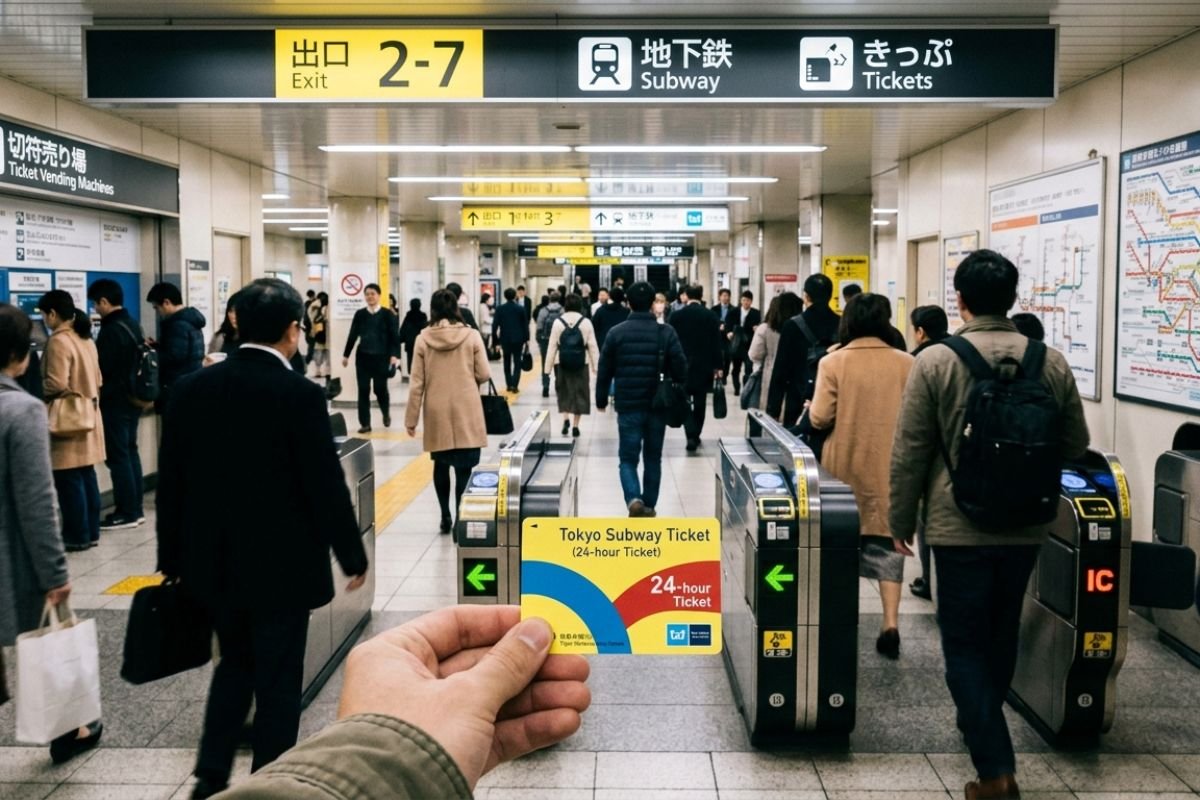
Tokyo’s trains and subways are clean, safe, and on time. They are also the cheapest way to move around. Single subway and JR rides in the city often cost about ¥180 to ¥400.
Get an IC Card First
An IC card lets you tap in and out on trains, subways, and many buses. You can also use it at vending machines and convenience stores.
- Welcome Suica (physical): Made for visitors, with no deposit. It is valid for 28 days, and leftover money is not refunded, so spend it down before you fly home.
- Welcome Suica Mobile: Free on iPhone and Apple Watch, valid for 180 days. There was still no Android version as of August 2026.
- Tourist PASMO: A 28-day, no-deposit card that went on sale on May 20, 2026 at Haneda and Narita airports.
- Regular Suica or PASMO: These carry a ¥500 refundable deposit.
Is the Tokyo Subway Ticket Worth It?
The Tokyo Subway Ticket gives unlimited rides on all Tokyo Metro and Toei Subway lines. It is sold to short-stay visitors. These are the official adult prices, and child tickets are half price.
| Ticket | Adult price | Child price |
| 24 hours | ¥1,000 | ¥500 |
| 48 hours | ¥1,500 | ¥750 |
| 72 hours | ¥2,000 | ¥1,000 |
Tokyo Metro says the pass pays off at about 6 rides in a day for the 24-hour ticket. For the 48-hour and 72-hour tickets, it suggests about 5 and 4 rides per day. Do the math for your own plan. The pass does not cover JR lines such as the Yamanote Line.
Cheap Airport Transfers
The airport ride can cost very different amounts. Pick the slower train if you are not in a hurry.
| Route | Approx. fare | Approx. time |
| Narita to Asakusa (Keisei Access Express) | ¥1,270 | About 70 minutes |
| Narita to Tokyo Station (Narita Express) | ¥3,070 | About 60 minutes |
| Haneda to central Tokyo (Keikyu Line) | ¥300 to ¥500 | About 15 to 25 minutes |
Note that JR East raised fares in March 2026, its first major increase in over 40 years. Check current fares before you travel.
Other Ways to Save on Transport
- Walk between nearby sights. Many Tokyo neighborhoods are best explored on foot.
- Avoid taxis. Fares add up fast.
- Plan your last train. Most trains stop running around midnight.
- Skip the Shinkansen unless you are leaving Tokyo for a day trip.
Pro Tips for Saving Even More
These extra moves can make Tokyo on a budget even cheaper.
- Travel off-peak. Avoid cherry blossom weeks, Golden Week, and New Year. Mid-January to February tends to be cheapest.
- Use the weak yen. A weaker yen has kept dollar-based budgets friendly in 2026, but rates change. Check the rate before you go.
- Use a card with no foreign transaction fees. Keep some cash for small shops, shrines, and ticket machines.
- Know the new tax-free rules. From November 1, 2026, tourists pay the full price with tax in the store, then claim the refund at the airport after departure. The ¥5,000 minimum before tax stays the same. Direct shipping from tax-free shops still works.
- Remember the departure tax. Japan’s departure tax rose from ¥1,000 to ¥3,000 on July 1, 2026. It is usually added to your airfare, so check your ticket.
- Skip tourist-trap restaurants. Eat a few streets away from big attractions and station exits.
- Cut bag-carrying costs. Use coin lockers sparingly, or pack light so you do not need them.
Common Budget Mistakes to Avoid
- Buying a transit pass without counting your rides
- Booking a cheap room far from any station
- Paying for several observation decks
- Forgetting taxes and fees when comparing hotel prices
- Eating every meal at sit-down restaurants
Is Tokyo Worth It on a Budget?
Yes, for most travelers. You will not get the same savings you might find in Southeast Asia, but you will get excellent value for the money.
What you gain:
- Safe, clean, easy public transit
- Delicious food at low prices
- Many free parks, shrines, and viewpoints
- A city that works well with kids and families
What to accept:
- Small rooms
- Planning ahead for peak seasons
- Some tipping-free but still pricey extras like paid attractions and taxis
If you want fancy hotels and fine dining, costs rise quickly. If you enjoy walking, local food, and simple stays, visiting Tokyo on a budget feels rich in experiences.
Conclusion
Tokyo on a budget comes down to a few smart choices. Pick an affordable stay near a station. Eat set lunches, konbini snacks, and noodle shops. Fill your days with free shrines, parks, and viewpoints. Use an IC card or a subway pass based on how often you ride.
Also keep the new 2026 rules in mind: the higher departure tax, the airport-refund tax-free system from November 1, and Tokyo’s lodging tax change in April 2027. With a little planning, you can save money in Tokyo without missing out on what makes it special.
Frequently Asked Questions
How much money do I need per day in Tokyo?
Plan for about ¥10,000 to ¥15,000 per person per day on a budget, excluding flights. Mid-range travelers often spend around ¥22,000. Hotels usually cost the most.
Is Tokyo really that expensive?
Not always. Lodging and luxury shopping drive the high-cost reputation. Food, transit, and sightseeing can be quite cheap if you choose local options.
What is the cheapest time to visit Tokyo?
Mid-January to February is often the cheapest period. July and August can also be lower in price, outside mid-August Obon holidays, but the heat and humidity are strong.
Should I buy a Tokyo Subway Ticket or use an IC card?
Compare your plan. If you will take many subway rides each day, the Tokyo Subway Ticket can save money. If you use JR lines or only ride a few times, an IC card is simpler.
What is the cheapest way to get from the airport into Tokyo?
From Haneda, the Keikyu Line is usually the cheapest. From Narita, the Keisei Access Express costs far less than the Narita Express, though it takes a bit longer.
Do I need to tip in Tokyo?
No. Tipping is not expected in restaurants, taxis, or hotels in Japan.
Is Tokyo on a budget realistic with kids?
Yes. Kids ride cheaper on many tickets, parks and shrines are free, and set meals and konbini picnics keep food costs down. Choose a room type that fits your family size.
How many days do I need in Tokyo?
Three to five days covers the main sights without stretching your budget. Longer trips can lower your average daily cost if you stay in one place.






- Be Respectful
- Stay Relevant
- Stay Positive
- True Feedback
- Encourage Discussion
- Avoid Spamming
- No Fake News
- Don't Copy-Paste
- No Personal Attacks
- Be Respectful
- Stay Relevant
- Stay Positive
- True Feedback
- Encourage Discussion
- Avoid Spamming
- No Fake News
- Don't Copy-Paste
- No Personal Attacks
